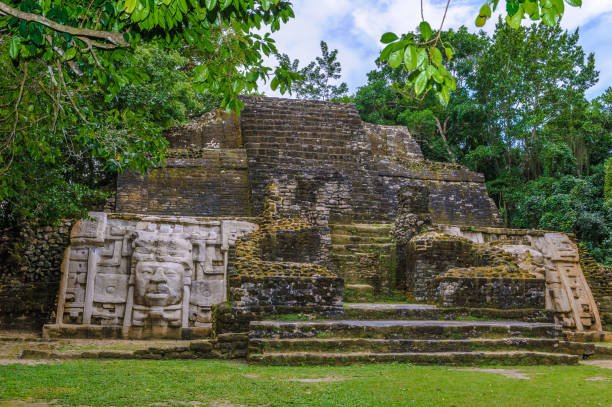
Deep within the tropical forests of Central America stand the silent remains of one of humanity’s most remarkable civilizations. Towering pyramids rise above the jungle canopy. Stone palaces, ceremonial plazas, and carved monuments emerge from thick vegetation like ghosts from another age. These are the remnants of the ancient Maya, a civilization that achieved extraordinary advances in architecture, astronomy, mathematics, writing, and engineering.
For centuries, explorers who stumbled upon these ruins were left with a haunting question. How could such magnificent cities have been abandoned?
The mystery captured the imagination of generations. Vast urban centers that once housed tens of thousands of people were gradually deserted. Monument construction ceased. Royal dynasties disappeared. The sounds of bustling marketplaces and sacred ceremonies faded away.
At first glance, it appeared as though an entire civilization had suddenly collapsed and vanished into history.
Yet the reality is both more complex and more fascinating.
Modern archaeology has revealed that the Maya people did not disappear. Their descendants still live throughout Mexico, Guatemala, Belize, Honduras, and El Salvador. Their languages, traditions, and cultural identity continue to thrive.
The real mystery is not why the Maya vanished. The mystery is why many of their great cities were abandoned, especially during a period known as the Classic Maya Collapse.
Today, scientists, archaeologists, climatologists, and historians continue to investigate this extraordinary chapter of human history. Their discoveries have transformed our understanding of the Maya world and revealed a story involving environmental pressures, political turmoil, warfare, social change, and human resilience.
Who Were the Maya?
To understand why the Maya abandoned their cities, it is important first to understand who they were.
The Maya civilization developed in a region known as Mesoamerica, covering parts of present-day southern Mexico, Guatemala, Belize, western Honduras, and El Salvador.
Unlike many ancient civilizations that were unified under a single empire, the Maya world consisted of numerous independent city-states. Each city had its own rulers, political alliances, rivalries, and traditions.
The Maya built impressive urban centers long before many famous European cities existed. They developed one of the world’s most sophisticated writing systems, recorded historical events in carved stone monuments, and created detailed calendars that tracked astronomical movements with remarkable precision.
Their cities featured pyramids, palaces, ball courts, reservoirs, roads, and ceremonial plazas. Skilled artists produced intricate sculptures, paintings, and ceramics.
Far from being isolated jungle dwellers, the Maya participated in extensive trade networks connecting distant regions.
By the height of the Classic Period, roughly between 250 and 900 CE, Maya civilization had reached an extraordinary level of complexity.
The Rise of the Great Maya Cities
The Classic Maya era witnessed the growth of some of the largest and most influential cities in the Americas.
Cities such as Tikal, Calakmul, Palenque, Copán, and Caracol became centers of political power, religious authority, and economic activity.
These cities were not small settlements.
Some supported populations numbering in the tens of thousands, while entire urban regions may have housed hundreds of thousands of people.
The surrounding landscape was heavily managed. Forests were cleared for agriculture. Terraces were constructed on hillsides. Reservoirs stored precious rainwater. Extensive road systems linked communities across great distances.
The Maya transformed challenging tropical environments into thriving centers of civilization.
For centuries, these cities flourished.
Then something changed.
The Mystery of the Classic Maya Collapse
Around the eighth and ninth centuries CE, signs of profound disruption began appearing across the southern Maya lowlands.
Monument inscriptions became less frequent.
Construction projects slowed.
Royal dynasties ended.
Populations declined.
Major urban centers were gradually abandoned.
By approximately 900 CE, many of the most powerful Classic Maya cities had lost much of their population.
The process did not occur everywhere at the same time.
Some cities declined earlier than others.
Some regions remained populated.
Some northern Maya centers continued thriving for centuries.
Nevertheless, the scale of the transformation was extraordinary.
Archaeologists eventually referred to this phenomenon as the Classic Maya Collapse.
For many years, researchers struggled to explain it.
Early Theories About the Collapse
When the ruins of Maya cities first attracted scholarly attention, many explanations were proposed.
Some suggested epidemics had devastated the population.
Others imagined foreign invasions.
Some believed earthquakes or volcanic eruptions had destroyed entire regions.
A few researchers even proposed that mysterious religious movements had prompted mass migrations.
These ideas were often based on limited evidence.
As archaeological methods improved, many early theories proved insufficient.
Researchers realized that the collapse was not a single event.
It unfolded over generations.
Different regions experienced different patterns of decline.
The Maya world was far more complicated than earlier scholars had imagined.
The search for answers became one of archaeology’s greatest challenges.
The Importance of Climate
One of the most significant breakthroughs came from climate research.
Scientists studying lake sediments, cave formations, and ancient environmental records discovered evidence that severe droughts affected parts of the Maya region during critical periods of decline.
These findings transformed the debate.
The Maya depended heavily on seasonal rainfall.
Unlike civilizations that developed beside major rivers such as the Nile or the Tigris and Euphrates, many Maya cities lacked large permanent water sources.
Rainwater collection was essential.
Reservoirs, canals, and water management systems helped communities survive dry seasons.
But prolonged drought presented a far greater challenge.
Evidence suggests that several severe drought episodes occurred during the period when many cities were declining.
Reduced rainfall likely placed enormous pressure on agriculture, food production, and water supplies.
For densely populated cities, the consequences could have been devastating.
How Drought Could Affect a Civilization
Imagine a city dependent on regular seasonal rains.
Year after year, crops grow successfully.
Food supplies remain stable.
Population increases.
Construction projects expand.
Political leaders gain prestige by ensuring prosperity.
Now imagine that rainfall becomes unreliable.
Harvests shrink.
Food becomes scarce.
Reservoirs begin drying.
Competition for resources intensifies.
Public confidence in leaders weakens.
Social tensions rise.
Trade networks suffer.
Conflict becomes more likely.
This scenario illustrates why drought has become such an important factor in explaining Maya urban decline.
However, climate alone does not fully explain the collapse.
Many societies survive droughts.
The real question is why the Maya system became so vulnerable.
Population Growth and Environmental Pressure
As Maya cities expanded, they required increasing amounts of food, wood, and other resources.
Growing populations placed tremendous pressure on surrounding landscapes.
Forests were cleared for agriculture and construction.
Wood was needed for fuel and lime production, an important component of Maya architecture.
Agricultural land expanded to support larger populations.
Over time, environmental degradation may have reduced resilience.
Deforestation can alter local climates, increase soil erosion, and affect water retention.
As environmental pressures intensified, societies became more vulnerable to climatic fluctuations.
When drought struck, densely populated urban centers may have struggled to adapt.
The combination of environmental stress and climate change created a dangerous situation.
Warfare Between Rival Kingdoms
For many years, scholars viewed the Maya as relatively peaceful.
This image changed dramatically as researchers deciphered Maya inscriptions.
The monuments revealed a world filled with political competition, alliances, betrayals, and warfare.
City-states frequently fought one another.
Kings sought prestige through military victories.
Captives were taken during conflicts.
Dynasties competed for power and influence.
As resources became scarcer, warfare may have intensified.
Evidence from archaeological sites suggests increasing fortifications, defensive structures, and signs of violent conflict during the late Classic period.
War can destabilize societies in numerous ways.
It disrupts agriculture.
It damages trade networks.
It forces population movements.
It weakens governments.
It consumes resources already under strain.
In a period of environmental stress, warfare may have accelerated existing problems.
The Fragility of Maya Political Systems
Maya rulers derived authority from a combination of political power and religious legitimacy.
Kings were not simply administrators.
They were viewed as intermediaries between humans and supernatural forces.
Their ability to maintain prosperity reinforced their authority.
During periods of stability, this system worked effectively.
But prolonged crises could undermine confidence.
If droughts reduced harvests and warfare increased suffering, people may have questioned whether rulers still possessed divine favor.
Political systems dependent on elite authority can become vulnerable when leaders appear unable to solve major problems.
Archaeological evidence suggests that some royal dynasties collapsed during the period of decline.
Once political institutions weakened, urban centers may have lost the organizational structures necessary to sustain large populations.
The Breakdown of Trade Networks
Trade connected Maya cities across vast distances.
Goods such as obsidian, jade, ceramics, cacao, feathers, and other valuable materials moved through extensive exchange systems.
Trade brought economic benefits and helped maintain political relationships.
However, complex networks depend on stability.
Environmental stress, warfare, and political fragmentation can disrupt long-distance exchange.
As cities weakened, trade routes may have become less reliable.
Economic difficulties could have reinforced broader social challenges.
Communities that once depended on interconnected regional systems may have found themselves increasingly isolated.
The weakening of trade likely contributed to the gradual decline of urban centers.
Disease and Human Health
Disease is often considered a possible factor in societal collapse.
In the Maya case, evidence remains limited.
Unlike some later historical events where written records describe epidemics, direct proof for widespread disease-driven collapse is difficult to obtain.
Nevertheless, environmental stress can worsen health conditions.
Malnutrition weakens immune systems.
Crowded urban environments facilitate disease transmission.
Water shortages may reduce sanitation.
Although disease probably was not the sole cause of urban abandonment, it may have contributed to broader patterns of instability.
Human societies often face multiple challenges simultaneously.
The Evidence Hidden in Ancient Bones
Human skeletal remains provide valuable clues about life during the final centuries of many Maya cities.
Researchers examine bones and teeth to understand health, nutrition, and living conditions.
Some studies suggest increasing signs of stress in certain populations during periods associated with urban decline.
Evidence of nutritional problems appears in some regions.
These findings support the idea that food shortages may have affected communities.
However, conditions varied considerably across the Maya world.
Not every city experienced identical challenges.
The collapse was not a uniform event.
Different populations faced different circumstances.
This regional variation remains one of the most important aspects of the mystery.
Why the Collapse Was Not Sudden
Popular imagination often pictures civilizations collapsing overnight.
The reality is usually far more gradual.
The Maya collapse unfolded across decades and even centuries.
Some cities declined while neighboring centers remained active.
Certain regions recovered temporarily before experiencing further difficulties.
Families adapted in various ways.
Some migrated.
Others remained.
Communities reorganized.
Agricultural practices changed.
Political systems evolved.
The abandonment of cities was often a slow process rather than a dramatic catastrophe.
Understanding this gradual transformation helps explain why the collapse remains such a complex historical puzzle.
The Maya Did Not Disappear
One of the most important facts about the Maya collapse is that the Maya people survived.
This distinction cannot be emphasized enough.
The decline involved cities and political systems, not the extinction of an entire civilization.
Millions of Maya descendants live today.
Many Maya languages remain actively spoken.
Traditional cultural practices continue across the region.
Communities adapted to changing circumstances and persisted long after major cities were abandoned.
The survival of Maya culture demonstrates remarkable resilience.
It also challenges outdated narratives that portray the collapse as a complete disappearance.
Life After the Megacities
Following the decline of many southern lowland cities, Maya civilization continued in new forms.
Northern centers gained importance.
Urban life persisted in various regions.
Political power shifted rather than vanished entirely.
One notable example was Chichén Itzá, which emerged as a major center after the decline of many Classic cities.
Other communities adapted to changing economic and environmental conditions.
The history of the Maya after the Classic collapse is not a story of extinction.
It is a story of transformation.
Societies evolved, reorganized, and continued developing.
What Modern Technology Has Revealed
Recent technological advances have revolutionized Maya archaeology.
One of the most important tools is LiDAR, a remote sensing technology that can penetrate forest canopies and reveal hidden archaeological features.
LiDAR surveys have uncovered thousands of previously unknown structures.
Researchers have identified roads, terraces, reservoirs, fortifications, and urban landscapes hidden beneath dense vegetation.
These discoveries show that Maya populations were often much larger than previously believed.
The scale of landscape modification was immense.
Understanding these vast urban networks helps scientists better evaluate how environmental pressures and population growth may have interacted.
Each new discovery adds pieces to the puzzle.
Lessons From Resilience and Adaptation
The Maya story is not merely about collapse.
It is also about resilience.
Communities faced environmental challenges, political instability, warfare, and social transformation.
Yet they adapted.
People changed settlement patterns.
They developed new strategies for managing resources.
They reorganized political structures.
They preserved cultural traditions.
Human history often focuses on dramatic endings.
The Maya remind us that adaptation can be just as important as collapse.
Their descendants continue to demonstrate cultural continuity despite centuries of change.
What Scientists Believe Today
Most researchers no longer search for a single cause of the Maya collapse.
Instead, they view the process as the result of multiple interacting factors.
Climate stress appears to have played a major role.
Environmental degradation likely increased vulnerability.
Population growth placed pressure on resources.
Warfare destabilized political systems.
Trade disruptions weakened economies.
Political institutions struggled to manage mounting challenges.
Together, these factors created conditions that many urban centers could not sustain.
Rather than a single disaster, the collapse emerged from a complex web of interconnected problems.
This perspective reflects the growing sophistication of modern archaeological research.
Why the Mystery Still Matters
The story of the Maya collapse resonates because it raises timeless questions about human societies.
How do civilizations respond to environmental change?
What happens when populations exceed available resources?
How do political systems cope with prolonged crises?
Can complex societies adapt to multiple simultaneous challenges?
These questions remain relevant today.
Modern civilizations face their own environmental, economic, and political pressures.
The Maya experience provides a valuable historical case study.
It reminds us that even highly advanced societies can encounter serious challenges when multiple stresses converge.
At the same time, it demonstrates humanity’s remarkable capacity for adaptation and survival.
The Enduring Legacy of the Maya
Walking through the ruins of an ancient Maya city can be a profoundly moving experience.
Massive pyramids rise from the forest floor.
Stone carvings preserve the names of kings long gone.
Silent plazas hint at ceremonies, celebrations, and daily lives that unfolded centuries ago.
These ruins tell a story of achievement, creativity, ambition, and resilience.
The Maya built one of the most sophisticated civilizations in the ancient Americas.
They developed writing, mathematics, astronomy, architecture, and engineering that continue to impress scholars today.
Their cities may have been abandoned, but their legacy endured.
Conclusion
The abandonment of the Maya megacities remains one of the most fascinating mysteries in human history. For generations, researchers searched for a single explanation, but modern evidence reveals a far more complex story.
The decline of many great Maya cities appears to have resulted from the interaction of multiple factors. Severe droughts placed pressure on water supplies and agriculture. Population growth increased demands on the environment. Deforestation and resource depletion reduced resilience. Warfare intensified political instability. Trade networks weakened. Royal authority eroded as societies struggled to cope with mounting challenges.
Yet the Maya themselves did not disappear.
Their civilization transformed rather than vanished. Communities adapted, migrated, reorganized, and survived. Their descendants continue to live throughout Mesoamerica, preserving languages, traditions, and cultural identities that connect the present to an extraordinary past.
The mystery of the Maya megacities is therefore not simply a story of collapse. It is a story of human ingenuity, vulnerability, adaptation, and endurance. The silent ruins hidden within the forests of Central America remind us that even the most impressive civilizations face challenges, but they also remind us that cultures can survive long after cities fall silent.
In the end, the greatest lesson of the Maya may not be how their cities were abandoned, but how their people endured.