There are few stories in ancient history as haunting as the disappearance of Helike. Imagine going to bed in a thriving coastal city, surrounded by grand temples, bustling markets, and prosperous homes, only for the entire city to vanish before dawn. According to ancient writers, this is exactly what happened in the winter of 373 BCE, when Helike, one of the most important cities in ancient Greece, was swallowed by the earth and the sea in a single catastrophic night.
To the people of the ancient world, there was only one explanation: the gods had spoken.
They believed Helike had been destroyed by the wrath of Poseidon, the powerful god of the sea, earthquakes, and horses. According to legend, the citizens had offended the god by refusing to respect his sacred sanctuary and by mistreating visitors who sought refuge in his temple. Soon afterward, terrifying earthquakes shook the ground, enormous waves crashed inland, and the prosperous city disappeared forever beneath water and mud.
For centuries, Helike became one of the greatest mysteries of the ancient Mediterranean. Writers described its destruction in vivid detail, while travelers searched in vain for its ruins. Some even claimed they could see the tops of submerged buildings beneath the sea on calm days.
Modern science has transformed this ancient legend into one of archaeology’s most fascinating detective stories. Excavations, geological research, and historical investigations have revealed that the destruction of Helike was indeed real. While the disaster was not caused by divine anger, it was every bit as terrifying as the ancient stories described.
Today, Helike stands as a powerful reminder that nature can reshape entire civilizations in a matter of minutes. It also demonstrates how myths often preserve remarkable memories of real historical events, even when they explain those events through the language of gods and legends.
A Powerful City in Ancient Greece
Long before disaster struck, Helike was one of the leading cities of northern Greece.
It stood in the region of Achaea along the southern shore of the Gulf of Corinth, an area known for fertile plains, active trade, and strategic coastal access. The city’s location allowed it to prosper through agriculture, fishing, commerce, and maritime connections with other Greek communities.
Helike was not an isolated settlement.
It served as the leading city of the Achaean League during certain periods, giving it political influence beyond its immediate surroundings. Merchants, sailors, priests, artisans, and farmers all contributed to its growing prosperity.
Ancient visitors would have encountered busy streets filled with traders, workshops producing pottery and metal goods, ships arriving at nearby harbors, and religious ceremonies honoring the city’s patron deity.
To its residents, Helike probably seemed permanent.
Like many successful cities throughout history, few could imagine that everything around them could disappear almost overnight.
The Sacred City of Poseidon
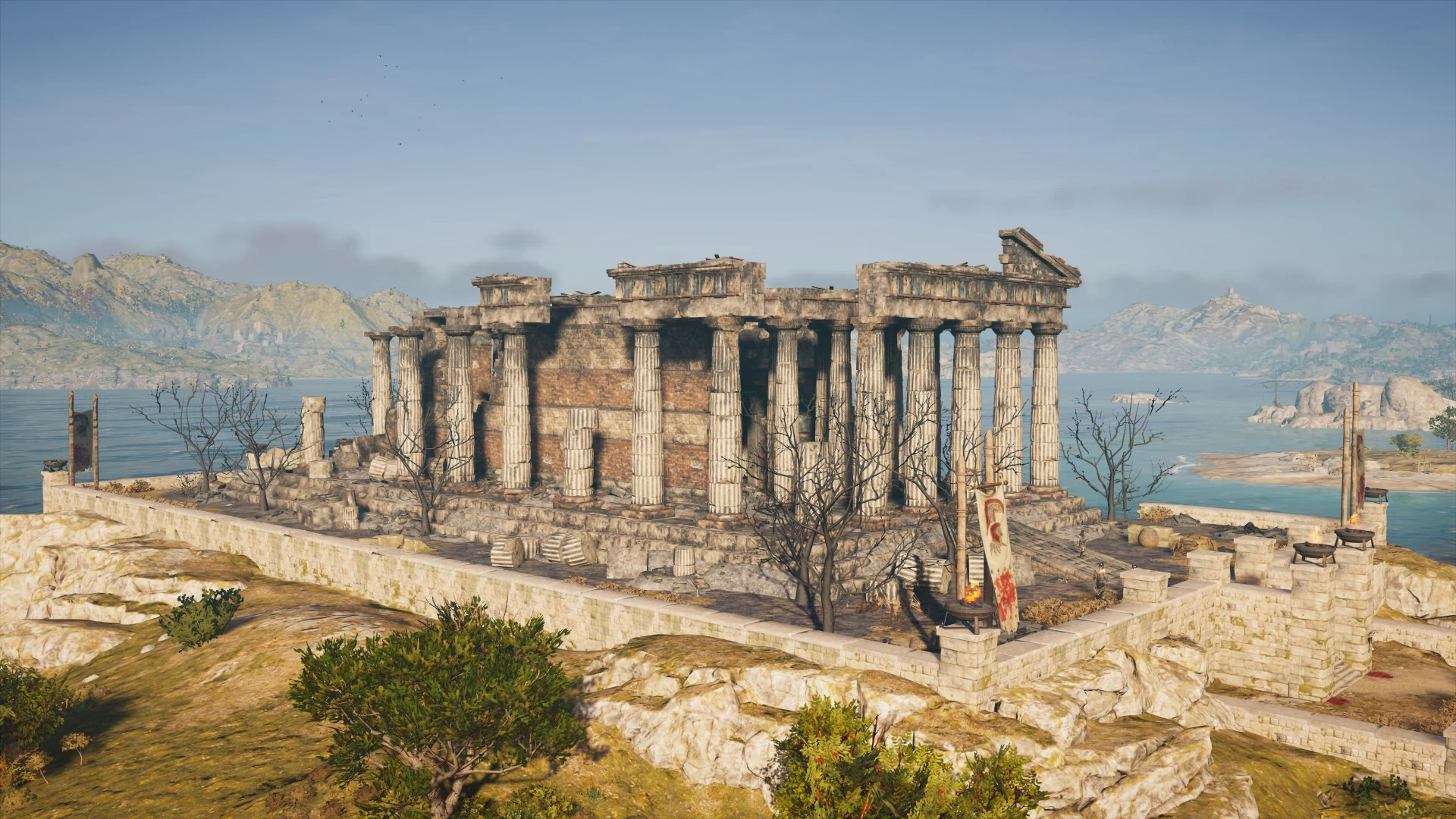
Among Helike’s greatest treasures was its magnificent sanctuary dedicated to Poseidon.
In Greek mythology, Poseidon ruled the seas, controlled storms, caused earthquakes, and protected sailors. His worship extended throughout the Greek world, but Helike occupied a particularly important place in his cult.
The city’s temple attracted pilgrims from distant regions.
Religious festivals celebrated Poseidon’s power over both sea and land. Sacrifices, ceremonies, and processions reinforced the city’s identity as one of the god’s favored places.
Ironically, the very deity believed to protect Helike would later be blamed for its destruction.
To ancient Greeks, this tragic reversal carried a profound moral lesson.
A city blessed by the gods could also be punished by them.
The Legend of Divine Anger
Ancient writers preserved a dramatic explanation for Helike’s destruction.
According to several accounts, visitors from Asia Minor arrived seeking refuge at Poseidon’s sanctuary. The citizens of Helike allegedly refused their request and expelled them from the sacred site.
Some versions of the story claim the refugees were even killed.
Such actions violated one of the most sacred principles of Greek religion.
Temples served as places of sanctuary.
To deny protection to those seeking refuge under a god’s authority was considered a grave offense.
The stories describe Poseidon becoming enraged.
His punishment came swiftly.
During the night, powerful earthquakes shook the earth.
The ground split apart.
The sea surged inland.
By morning, Helike had vanished.
Whether these stories reflect actual events or later moral interpretations remains uncertain. Ancient societies often explained disasters through divine justice rather than natural causes.
Nevertheless, the destruction itself was unquestionably real.
The Night Everything Changed
Historical sources describe extraordinary events preceding the catastrophe.
Strong earthquakes struck the region.
Animals reportedly behaved strangely.
The ground trembled repeatedly.
Then came the final disaster.
During the winter of 373 BCE, a devastating earthquake struck the area.
The shaking likely lasted less than a minute.
Yet those brief moments completely transformed the landscape.
Buildings collapsed.
Stone walls crumbled.
Roofs fell onto streets.
People had little opportunity to escape.
Soon afterward, seawater flooded the region.
Ancient writers described enormous waves overwhelming the city.
Although their descriptions resemble what modern scientists call a tsunami, geological evidence suggests the disaster involved several interconnected processes rather than a simple tidal wave.
The combination of earthquake, flooding, and ground failure proved catastrophic.
Earthquakes in Ancient Greece
To understand Helike’s destruction, it is important to understand Greece itself.
Modern Greece lies within one of the world’s most active earthquake zones.
The African tectonic plate slowly pushes beneath the Eurasian plate.
This ongoing collision creates tremendous geological stress.
When accumulated stress is suddenly released, earthquakes occur.
The Gulf of Corinth is especially active.
Even today, earthquakes regularly affect the region.
Scientists studying Helike therefore recognize that the city’s destruction occurred in an environment where powerful seismic events are entirely consistent with known geological processes.
Ancient people lacked plate tectonic theory.
To them, earthquakes appeared mysterious and terrifying.
Since Poseidon was traditionally associated with earthquakes, it was natural to interpret seismic disasters as expressions of his will.
What Really Happened?
Modern geological research paints a fascinating picture.
The earthquake itself certainly caused extensive destruction.
However, another deadly process appears to have followed.
The ground beneath Helike consisted partly of loose sediments deposited over thousands of years by rivers flowing into the Gulf of Corinth.
During intense shaking, water-saturated sediments can suddenly lose strength.
This phenomenon is called liquefaction.
Instead of behaving like solid ground, the soil temporarily behaves more like liquid.
Buildings sink.
Roads collapse.
Entire landscapes may subside.
Researchers believe liquefaction played a major role in Helike’s destruction.
The city may literally have sunk into unstable sediments while floodwaters spread across the area.
Combined with possible tsunami waves, the effects would have been devastating.
A City Buried, Not Simply Drowned
For centuries, people assumed Helike rested beneath the sea.
Ancient writers even described fishermen seeing submerged ruins.
Modern archaeology has revealed a more complicated reality.
Changes in coastlines over thousands of years altered the landscape dramatically.
River sediments gradually filled parts of the ancient shoreline.
Areas once underwater became dry land.
Other areas changed shape entirely.
Excavations eventually demonstrated that much of ancient Helike lies buried beneath layers of sediment inland rather than deep beneath the modern sea.
This discovery solved one of archaeology’s longest-running mysteries.
The city had not vanished into the ocean alone.
It had also disappeared beneath centuries of geological change.
The Long Search
Finding Helike proved surprisingly difficult.
Ancient authors described its destruction clearly enough that scholars believed the city should be relatively easy to locate.
Yet expedition after expedition failed.
Researchers searched underwater.
Divers explored coastal regions.
Historians debated ancient maps.
Some questioned whether the city had ever existed.
Others wondered whether the ancient descriptions had been exaggerated.
The mystery persisted for generations.
It became one of archaeology’s most frustrating puzzles.
Only advances in geology and systematic excavation finally revealed the truth.
Rediscovering Helike
During the late twentieth century, archaeologists intensified efforts to locate Helike.
Instead of searching exclusively offshore, researchers examined inland areas where geological evidence suggested the ancient coastline once existed.
This new approach proved successful.
Excavations uncovered remains of ancient buildings, roads, pottery, coins, walls, and other artifacts buried beneath thick sediment deposits.
Scientific dating confirmed the material belonged to the correct historical period.
The discoveries strongly supported identification of the long-lost city.
After more than two thousand years, Helike had finally been found.
The rediscovery marked one of the most remarkable achievements in Mediterranean archaeology.
What Archaeologists Found
Excavations revealed evidence of sudden destruction.
Collapsed structures suggested violent earthquake damage.
Artifacts remained remarkably well preserved beneath protective sediment layers.
Pottery, household items, architectural remains, and other discoveries provided valuable insights into daily life.
Researchers also found evidence consistent with flooding.
Sediment deposited rapidly across the site indicated a catastrophic environmental event rather than gradual abandonment.
Each excavation season added new pieces to the puzzle.
Together they painted a picture remarkably consistent with ancient historical accounts.
Although details differed from legendary versions, the essential story proved accurate.
A prosperous city had indeed been destroyed suddenly by natural catastrophe.
Daily Life Before Disaster
Before the earthquake, Helike was a thriving Greek community.
Families lived in stone and mudbrick houses.
Markets bustled with merchants selling grain, olive oil, wine, pottery, textiles, and imported goods.
Farmers cultivated fertile fields surrounding the city.
Fishing boats operated along nearby waters.
Children played in narrow streets while craftsmen worked in workshops producing everyday necessities.
Religious festivals brought together people from neighboring communities.
Musicians performed.
Athletes competed.
Priests conducted sacrifices at Poseidon’s sanctuary.
Life followed familiar rhythms shaped by seasons, agriculture, trade, and worship.
No one knew those routines were approaching their final day.
The Power of Memory
One reason Helike fascinates historians is the remarkable accuracy of cultural memory.
Ancient writers recorded key elements of the disaster.
A major earthquake.
Flooding.
Sudden destruction.
A vanished city.
Modern geological evidence confirms these central facts.
Although myths attributed the catastrophe to divine punishment, the memory preserved genuine historical information across many generations.
This demonstrates how oral traditions and historical storytelling can sometimes retain important details about real events, even when explanations differ from modern scientific understanding.
Helike and Atlantis
Some researchers have wondered whether Helike influenced later stories about lost civilizations.
Its sudden disappearance closely resembles descriptions of legendary cities swallowed by the sea.
Most famously, comparisons have been drawn with Atlantis.
Both stories involve prosperous cities destroyed suddenly by earthquakes and flooding.
Both became symbols of catastrophic loss.
Some historians suggest knowledge of Helike may have reinforced ancient Greek interest in stories of vanished cities.
However, the chronology presents challenges.
The philosopher Plato introduced the story of Atlantis shortly after Helike’s destruction.
Whether Helike influenced his thinking remains uncertain.
The possibility continues to intrigue scholars.
Ancient Disaster Through Modern Science
Modern science allows researchers to reconstruct Helike’s destruction in extraordinary detail.
Seismologists study earthquake faults beneath the Gulf of Corinth.
Geologists examine sediment layers.
Archaeologists analyze building collapse patterns.
Paleoenvironmental scientists reconstruct ancient coastlines.
Each discipline contributes another piece of evidence.
Rather than relying solely on literary accounts, investigators combine physical evidence with historical sources.
The result is one of the clearest scientific reconstructions of an ancient natural disaster.
Why the City Was Never Rebuilt
Unlike many ancient cities destroyed by earthquakes, Helike was never fully restored.
Several factors likely contributed.
The landscape itself had changed dramatically.
Flooding altered the terrain.
Ground instability may have discouraged reconstruction.
Political circumstances also evolved.
Neighboring cities absorbed regional influence once held by Helike.
Over time, the ruined city disappeared beneath sediment while memories survived in literature.
Nature had erased the physical city.
History preserved its story.
Lessons About Natural Hazards
Helike offers valuable lessons extending far beyond archaeology.
Earthquakes remain major hazards throughout many parts of the world.
Liquefaction continues to threaten cities built upon unstable sediments.
Tsunamis still pose dangers along vulnerable coastlines.
Studying ancient disasters helps scientists better understand future risks.
Archaeological evidence provides records extending thousands of years beyond modern written observations.
Each ancient catastrophe improves understanding of long-term geological behavior.
In this way, Helike contributes not only to history but also to disaster science.
The Enduring Legacy of Helike
Today, Helike occupies a unique place in history.
It represents one of the best-documented examples of an ancient city destroyed by natural catastrophe.
It demonstrates the remarkable accuracy that historical traditions can sometimes preserve.
It reminds us that civilizations often appear stable until nature suddenly intervenes.
Most importantly, Helike illustrates the value of combining archaeology, geology, history, and environmental science.
No single discipline solved the mystery alone.
Together they transformed legend into evidence-based history.
Conclusion
The story of Helike begins with a legend of divine punishment but ends as one of archaeology’s greatest success stories. Ancient Greeks believed the city had been destroyed by Poseidon’s wrath after its people violated sacred traditions. Modern science offers a different explanation. Powerful earthquakes, unstable ground, liquefaction, flooding, and possibly tsunami waves combined to erase one of Greece’s most prosperous cities during a single catastrophic night in 373 BCE.
Yet the ancient storytellers were not entirely wrong. While they misunderstood the cause, they accurately remembered the event itself. Their accounts preserved the memory of a real disaster for more than two thousand years until archaeology and geology confirmed much of what had once seemed like myth.
Today, Helike reminds us that history is often hidden beneath layers of earth, waiting patiently for discovery. It teaches that legends sometimes contain surprising truths, that nature possesses immense destructive power, and that even the greatest cities can disappear within hours. Above all, Helike stands as a testament to humanity’s determination to uncover the past, transforming ancient mystery into scientific understanding while preserving the timeless wonder of one of history’s most dramatic lost cities.