Far out in the vast blue expanse of the Pacific Ocean, thousands of kilometers from the world’s major cities, lies one of the most extraordinary archaeological sites ever built by human hands. Rising from shallow waters along the coast of the island of Pohnpei in the Federated States of Micronesia is a ruined stone city unlike any other on Earth.
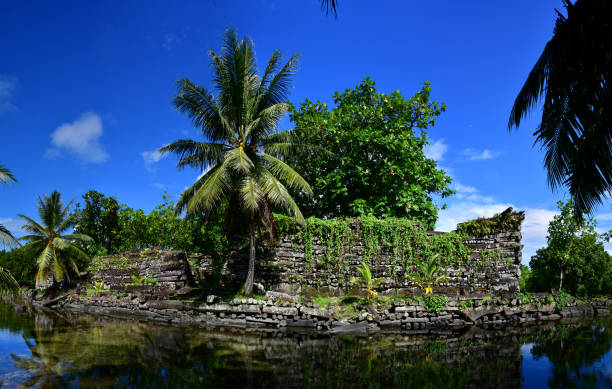
Known as Nan Madol, this remarkable complex consists of nearly one hundred artificial islets connected by a network of canals. Massive basalt stones, some weighing several tons, form towering walls that seem almost impossible to have been constructed in such a remote location. The city sits atop a coral reef, surrounded by the sea, earning it the nickname “the Venice of the Pacific.”
For centuries, Nan Madol has inspired wonder, curiosity, and mystery. Local legends speak of powerful rulers, magical builders, and ancient spirits. Early European visitors struggled to understand how such an ambitious project could have been completed without metal tools, wheels, or large domestic animals.
Even today, many questions remain unanswered. How were the enormous stones transported? Why was the city built in the middle of the ocean rather than on land? What caused its decline? And what can its ruins tell us about the people who once lived there?
The story of Nan Madol is not only a tale of mystery. It is also a story of human ingenuity, cultural achievement, political power, and the remarkable ability of people to transform even the most challenging environments into thriving centers of civilization.
A Hidden City in the Pacific
To understand the significance of Nan Madol, it helps to appreciate its location.
Nan Madol stands on the eastern coast of Pohnpei, a lush volcanic island in Micronesia. Pohnpei is known for its dense tropical forests, steep mountains, waterfalls, and heavy rainfall. The island is surrounded by coral reefs and clear lagoons that have supported human communities for centuries.
At first glance, the waters near Nan Madol appear peaceful and ordinary. Yet beneath this tranquil setting lies one of the most unusual urban landscapes in world history.
Instead of constructing buildings on natural land, the builders created artificial islets using coral fill and massive basalt columns. These islets were then enclosed by stone walls and linked by waterways.
The result was a city that seemed to float upon the sea.
Today, many of these structures are covered with vegetation, their walls partly collapsed and their canals quiet. But even in ruin, Nan Madol remains breathtaking.
Visitors often describe a feeling of stepping into another world—a forgotten kingdom hidden among mangroves and ocean tides.
What Does Nan Madol Mean?
The name Nan Madol is commonly translated as “between spaces” or “within the intervals.”
The name reflects the city’s distinctive layout. Waterways separate the artificial islets, creating a network of channels that weave throughout the complex.
Unlike conventional cities with roads and streets, movement through Nan Madol often involved travel by canoe.
Water was not simply a surrounding feature. It was an integral part of the city’s design.
This close relationship between architecture and water gives Nan Madol a character unlike that of ancient cities elsewhere in the world.
The Scale of the Achievement
One of the most astonishing aspects of Nan Madol is the sheer scale of construction.
The city covers an area of approximately 200 acres and consists of nearly one hundred artificial islets.
The walls surrounding many structures are built from basalt logs—naturally formed columns created by volcanic activity. These stones were stacked horizontally in layers, resembling giant wooden logs arranged to form walls.
Some basalt columns weigh several tons.
The largest structures contain thousands of these massive stones.
For modern observers, a natural question arises: How did ancient builders move such enormous materials across water and coral reefs without modern machinery?
The answer remains one of the site’s greatest mysteries.
The People Behind the City
Nan Madol was the ceremonial and political center of the Saudeleur Dynasty, which ruled Pohnpei for centuries.
The Saudeleurs established one of the most centralized political systems in the history of Micronesia.
Before their rise, communities on Pohnpei were relatively independent. The Saudeleurs gradually brought these groups under centralized authority.
Nan Madol became the seat of this power.
The city functioned as an administrative center, a religious center, and a residence for elites.
Important ceremonies took place there. Political decisions were made there. Religious leaders performed rituals there.
The city symbolized the authority of the ruling dynasty.
Its monumental architecture communicated power in much the same way that pyramids, palaces, and temples did in other civilizations around the world.
Building a City on Coral Reefs
Constructing any city requires enormous effort.
Constructing a city on a coral reef presents even greater challenges.
Before buildings could be erected, the builders first had to create stable foundations.
Coral rubble was deposited to form artificial platforms. These platforms became the islets upon which structures were built.
Once the foundations were established, basalt columns were transported and assembled into walls.
The engineering involved was impressive.
Builders had to understand how to create stable structures capable of withstanding tropical weather, tides, and the passage of time.
They also needed a reliable system for organizing labor and acquiring materials.
The existence of Nan Madol demonstrates a high degree of social coordination and technical knowledge.
The Mystery of the Basalt Stones
Perhaps no aspect of Nan Madol generates more fascination than its basalt blocks.
The stones used in construction originated from volcanic formations elsewhere on Pohnpei.
Many of the quarries were located kilometers away from the construction site.
Transporting these stones would have been a major undertaking even with modern equipment.
Ancient builders had no cranes, trucks, or steel machinery.
Yet thousands of basalt columns somehow reached Nan Madol.
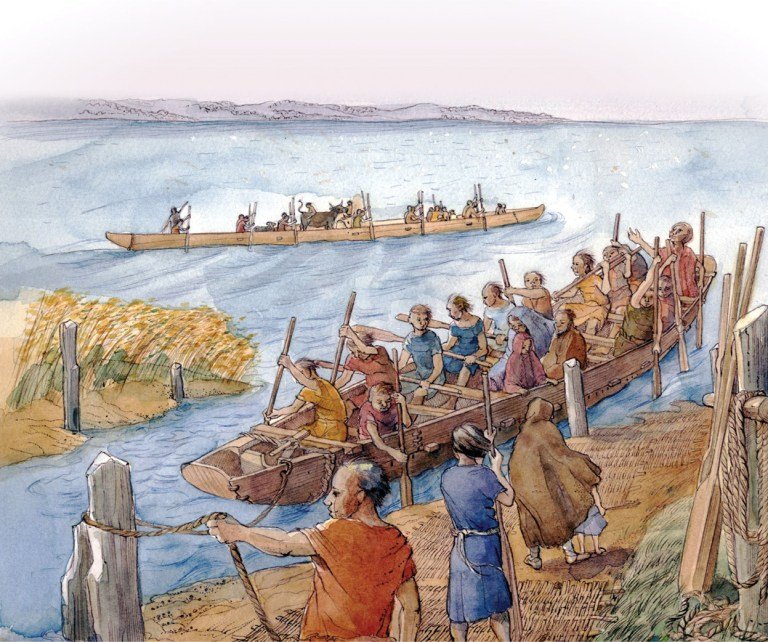
Archaeologists believe transportation likely involved a combination of human labor and watercraft.
Because basalt columns naturally resemble logs, some researchers suggest they may have been moved using rafts or canoes.
Ocean currents, tides, and careful planning may have played important roles.
Although scholars have proposed various methods, no definitive answer exists.
The transportation challenge remains one of the most intriguing aspects of the site.
Legends of Supernatural Builders
Local traditions offer their own explanation for the construction of Nan Madol.
According to Pohnpeian legends, two brothers named Olosohpa and Olosihpa arrived from distant lands.
These brothers were said to possess extraordinary powers.
The stories claim they used magic to levitate massive stones through the air and place them precisely where needed.
The brothers eventually established the ruling line associated with the Saudeleur Dynasty.
To modern readers, such stories may seem fantastical.
Yet myths often serve important cultural purposes.
They preserve memories of significant events, explain remarkable achievements, and reinforce social traditions.
The existence of supernatural legends surrounding Nan Madol highlights how extraordinary the city appeared even to later generations.
Its construction seemed so difficult that magical explanations emerged naturally.
The Ceremonial Heart of Pohnpei
Nan Madol was not merely a residential settlement.
It was a ceremonial center deeply connected to religion and political authority.
Many structures appear to have been used for rituals, feasts, and important gatherings.
The city’s layout suggests careful planning rather than random growth.
Different islets served different functions.
Some were associated with religious activities.
Others housed nobles or specialized workers.
Still others were used for food preparation, storage, or ceremonial purposes.
The organization of space reflected the social structure of the society itself.
Every canal, wall, and platform contributed to a larger vision of political and spiritual order.
The Royal Tombs
Among the most impressive structures in Nan Madol is Nandauwas.
This massive enclosure is often considered the architectural centerpiece of the city.
Towering basalt walls surround a central area that served as a royal mortuary complex.
Some walls reach heights exceeding seven meters.
The sheer size of the stones used in construction creates an almost fortress-like appearance.
Nandauwas housed the tombs of important rulers.
For the Saudeleur elite, burial practices were closely tied to status and authority.
The monumental scale of the complex emphasized the power of those interred within.
Even today, standing before these immense walls evokes a sense of awe.
They remain among the most impressive examples of stone architecture in Oceania.
Life Within the Stone City
Imagining daily life in Nan Madol brings the ruins to life.
Canoes moved through narrow canals carrying people, food, and goods.
Religious ceremonies filled sacred spaces with chants and rituals.
Political leaders met to discuss governance and maintain authority.
Fishermen supplied seafood from surrounding waters.
Workers maintained structures and supported the needs of the elite population.
Unlike large urban centers elsewhere in the ancient world, Nan Madol may not have housed a massive permanent population.
Many researchers believe the city functioned primarily as a ceremonial and administrative center rather than a densely populated city.
Nevertheless, it remained the heart of political power for centuries.
Food and Survival
Supporting life on artificial islets required careful planning.
Agricultural production occurred primarily elsewhere on Pohnpei.
Food was transported into Nan Madol from surrounding communities.
Breadfruit, taro, coconuts, fish, shellfish, and other resources sustained the population.
This arrangement reinforced the authority of the ruling elite.
Communities throughout the island contributed resources to the center of power.
The flow of food and goods helped maintain the political system.
Nan Madol depended upon a broader network of relationships extending far beyond its stone walls.
Archaeological Discoveries
Archaeologists have spent decades studying Nan Madol.
Excavations have revealed valuable information about construction methods, social organization, and daily life.
Researchers have uncovered pottery, tools, food remains, and burial sites.
Radiocarbon dating has helped establish a timeline for construction and occupation.
Evidence suggests major building activity intensified between approximately the twelfth and seventeenth centuries.
The findings demonstrate that Nan Madol was not built all at once.
Instead, it developed gradually over generations.
Each new construction project added to the complexity of the city.
The site represents centuries of accumulated effort.
Why Was Nan Madol Built?
One of the most important questions concerns purpose.
Why invest enormous resources in building a city on coral reefs?
Several explanations have been proposed.
The location may have enhanced political control.
By separating elites from the general population, rulers could reinforce their authority.
The island setting may also have possessed religious significance.
Water often plays important symbolic roles in human cultures.
The canals may have reflected spiritual beliefs about boundaries, transitions, or sacred space.
Practical considerations may have contributed as well.
The lagoon provided access to marine resources and transportation routes.
Most likely, multiple factors influenced the decision.
Political, religious, and environmental considerations probably worked together.
The Fall of the Saudeleur Dynasty
Like many centers of power throughout history, Nan Madol eventually declined.
According to oral traditions, the Saudeleur rulers became increasingly oppressive.
Discontent grew among the population.
Eventually, a warrior named Isokelekel arrived and led a successful rebellion.
The Saudeleur Dynasty fell.
Political authority shifted to a new system.
Although elements of Nan Madol remained important, its central role gradually diminished.
The city entered a long period of decline.
Without the political system that had sustained it, maintaining the complex became increasingly difficult.
Over time, nature began reclaiming the structures.
Nature Reclaims the City
Today, trees grow among ancient walls.
Mangroves spread through abandoned canals.
Roots penetrate cracks in basalt masonry.
Birds and insects inhabit spaces once occupied by rulers and priests.
The transformation creates an atmosphere both beautiful and haunting.
Visitors encounter a landscape where human achievement and natural processes coexist.
The ruins remind us that even the most impressive monuments are ultimately subject to time.
Civilizations rise and fall.
Cities flourish and fade.
Nature patiently reshapes what humanity leaves behind.
Nan Madol stands as a powerful example of this universal cycle.
Early European Encounters
When European explorers and visitors first encountered Nan Madol, many struggled to comprehend what they were seeing.
The city seemed unlike anything they expected to find in the remote Pacific.
Its massive stone architecture challenged assumptions about the capabilities of island societies.
Some observers exaggerated the mystery, proposing fantastic explanations.
Others underestimated the achievements of the builders.
Over time, more systematic research replaced speculation.
Archaeologists increasingly recognized Nan Madol as evidence of a sophisticated indigenous civilization.
The site became an important reminder that complex societies developed in many parts of the world, including regions often overlooked in traditional historical narratives.
Misconceptions and Myths
Because Nan Madol appears so unusual, it has attracted numerous fringe theories.
Some writers have suggested connections to Atlantis.
Others have proposed lost continents or extraterrestrial involvement.
These ideas often gain attention because the site seems mysterious.
However, archaeological evidence strongly supports human construction.
The builders were the ancestors of the people of Pohnpei.
Their achievements were extraordinary, but they were entirely human.
Recognizing this fact does not diminish the wonder of Nan Madol.
In many ways, it makes the accomplishment even more impressive.
Human creativity, organization, and determination produced the city without the aid of mythical civilizations or advanced lost technologies.
Nan Madol and World Heritage
The significance of Nan Madol extends far beyond Micronesia.
The site represents one of humanity’s most remarkable architectural achievements.
Its unique combination of engineering, political history, and cultural importance has earned international recognition.
In 2016, Nan Madol was inscribed as a UNESCO World Heritage Site.
This designation acknowledged its outstanding universal value.
The recognition also highlighted the importance of protecting the ruins for future generations.
Preservation efforts face significant challenges, including vegetation growth, erosion, and environmental change.
Safeguarding the site requires ongoing research and conservation work.
Climate Change and Future Threats
Like many coastal archaeological sites, Nan Madol faces growing environmental pressures.
Rising sea levels, stronger storms, and changing weather patterns pose potential risks.
Saltwater intrusion can damage structures.
Coastal erosion may affect foundations.
Increased flooding could accelerate deterioration.
These challenges add urgency to preservation efforts.
Nan Madol is not only a window into the past.
It is also part of a broader conversation about protecting cultural heritage in a changing world.
The future of the site depends upon careful management and international cooperation.
What Nan Madol Reveals About Human Civilization
Perhaps the most important lesson of Nan Madol is that human achievement is not limited by geography.
For many years, history focused heavily on civilizations in Europe, the Middle East, and parts of Asia.
Sites like Nan Madol remind us that remarkable societies developed across the globe.
The builders of Nan Madol created a monumental center in a remote island environment using local resources and indigenous knowledge.
Their accomplishments demonstrate ingenuity, adaptability, and organizational skill.
The city challenges outdated assumptions about what ancient societies could achieve.
It expands our understanding of human history.
The Enduring Mystery
Despite decades of study, Nan Madol retains an air of mystery.
Questions remain about construction techniques, social organization, religious practices, and political life.
Researchers continue to investigate the site using modern technologies.
New discoveries may reveal additional details about its history.
Yet some mysteries may never be fully solved.
The passage of centuries has erased many clues.
Certain answers may be lost forever.
Paradoxically, this uncertainty contributes to the site’s appeal.
Mystery invites curiosity.
Curiosity drives exploration.
And exploration deepens appreciation for the complexity of the human past.
Conclusion
Nan Madol is one of the most extraordinary archaeological sites on Earth. Built atop coral reefs in the heart of the Pacific Ocean, it stands as a testament to the creativity, determination, and engineering skill of the people who constructed it. Massive basalt walls, artificial islets, and intricate waterways combine to form a landscape unlike any other ancient city.
For centuries, Nan Madol served as the ceremonial and political center of the Saudeleur Dynasty. Its architecture reflected power, religious belief, and social organization. Although the city eventually declined, its ruins continue to inspire awe and wonder.
Modern archaeology has revealed much about Nan Madol, yet important questions remain unanswered. The transportation of enormous stones, the precise motivations behind the city’s design, and aspects of its cultural life continue to fascinate researchers.
What is certain is that Nan Madol deserves recognition as one of humanity’s great achievements. Hidden among tropical waters and mangrove forests, it tells a story of innovation, leadership, belief, and resilience. It reminds us that remarkable civilizations can emerge in the most unexpected places and that the history of human achievement is far richer and more diverse than many people realize.
Even today, as ocean waves gently move through its ancient canals, Nan Madol remains a place where history, mystery, and imagination meet. Its silent stone walls continue to whisper stories from a distant past, inviting each new generation to explore one of the Pacific’s greatest wonders.