Long before humanity carved its first words into stone or built temples to honor the gods, the universe was ruled by chaos. From that swirling, eternal darkness, the first beings emerged—primal forces older than time itself. Among them were the mighty Titans, the ancient gods of a forgotten age, and from their blood, their wrath, and their defiance were born the Giants—creatures of overwhelming strength and fury. The story of the Gigantomachy, the legendary war between the Olympian gods and the Giants, is not merely a myth. It is the heartbeat of Greek cosmology—a tale of rebellion, divine justice, and the eternal struggle between order and chaos.
In this mythic war, the very structure of existence trembled. Mountains were hurled like stones, the Earth quaked beneath the fury of supernatural armies, and the sky blazed with celestial fire. It was a war so colossal that it reshaped the cosmos and defined the hierarchy of divine power forever. To understand the Gigantomachy is to explore not only the might of gods but also the timeless human desire to challenge destiny.
The Birth of the Giants
The Giants were not merely big—they were the embodiment of raw, untamed chaos. Their origin is as dark as it is tragic. When the Titan Cronus was overthrown by his son Zeus and cast into Tartarus, the Earth herself—Gaia, the primordial mother—was enraged. Her children, the Titans, had been defeated and imprisoned in the shadowy depths beneath the world. Mournful and furious, Gaia’s sorrow turned to vengeance.
In her grief, Gaia let the blood of the castrated sky god Uranus seep into her soil. From this divine blood, she gave birth to a new race—the Gigantes, or Giants. Unlike the Titans, who were divine and noble, the Giants were monstrous, wild, and born of vengeance. They towered over mortals and gods alike, their strength unmatched, their hearts burning with hatred for Olympus.
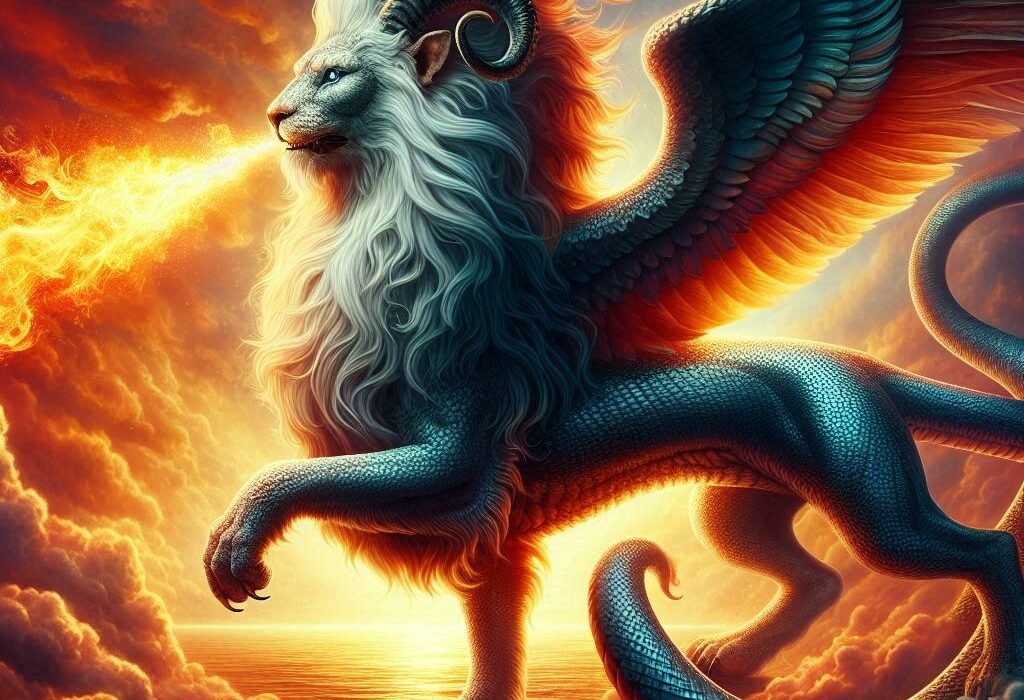
Ancient poets described them as beings with human upper bodies and serpentine legs, symbolizing their connection to both the earth and the underworld. Their voices could shatter mountains, and their strides could cover valleys. They were born with an unyielding destiny—to avenge their fallen brothers, the Titans, and to overthrow the rule of Zeus and his Olympian kin.
Gaia’s Wrath and the Prophecy of Doom
Gaia’s rage against Zeus was not only maternal—it was cosmic. She believed that the Olympians had disturbed the natural order by imprisoning her children beneath the Earth. In her fury, she approached her newly born sons, the Giants, and whispered to them the ancient prophecy: that one day, her children would rise up, storm the heavens, and destroy the gods of Olympus.
But Zeus had his own foresight. The Fates had revealed to him that the gods could not defeat the Giants without the help of a mortal. This detail would prove crucial, for it introduced a new element into the divine struggle—the intertwining of human destiny with cosmic warfare.
The Earth trembled as Gaia prepared her army. The Giants, armed with boulders, burning trees, and weapons forged from the bones of mountains, began to march. From every corner of the world, they gathered at the plain of Phlegra—a place destined to be scarred forever by divine conflict. The sky darkened. The sea boiled. Even the Titans, chained in Tartarus, felt the distant thunder of war.
The Call to Arms on Olympus
When the gods of Olympus learned of the approaching storm, they gathered in council. The air crackled with tension. Zeus, the king of the gods, sat upon his throne of lightning, his eyes blazing with the fire of the heavens. Around him stood the Olympians—Athena, radiant in her armor; Apollo, the god of light and prophecy; Ares, the embodiment of war; Artemis, swift and deadly; Poseidon, lord of the sea; and Hermes, the messenger who moved faster than thought.
They had faced challenges before—the rebellion of the Titans, the monstrous Typhon—but the Giants were something different. They were not merely rebels; they were the Earth’s vengeance incarnate. The gods prepared for battle, forging new weapons and invoking ancient powers. Hephaestus, the divine smith, crafted shields that gleamed with starlight and swords that burned like the sun.
But Zeus knew the prophecy could not be ignored. Without a mortal’s aid, the gods could not triumph. Thus, he turned his gaze toward the world of men, where a hero awaited his destiny—Heracles, the son of Zeus and a mortal woman, Alcmene. Heracles was half god, half man, and all courage. His strength was legendary, his will unbreakable. He was the bridge between the divine and the human—the one who would tip the scales of fate.
The Giants Rise from the Earth
The first tremors of the Gigantomachy shook the heavens as the Giants burst forth from the depths of Gaia. They came in countless numbers, their roars echoing across the mountains. Their leader was Alcyoneus, the mightiest of them all, a giant whose immortality was bound to the soil of his homeland. Alongside him stood Porphyrion, towering and terrible, whose ambition burned as hot as his rage. There were others—Enceladus, who could hurl flaming mountains; Polybotes, whose every step caused islands to sink; Ephialtes, whose arrows could pierce the sky; and Clytius, whose power rivaled the gods themselves.
The Giants attacked with fury. They tore up mountains and hurled them toward Olympus. Rivers changed course, forests burned, and the very stars trembled. The Earth herself moaned under the strain of her sons’ fury.
Zeus rose to meet them, hurling bolts of lightning that shattered the sky. Poseidon lifted his trident, and the seas surged in monstrous waves that swallowed armies whole. Athena descended with the precision of wisdom and war combined, her shield flashing with divine light that blinded her enemies. Ares charged with unstoppable fury, while Apollo loosed arrows that burned like sunlight through darkness.
But for every giant that fell, another rose. Their numbers seemed endless, their hatred inexhaustible. The war raged on, unending, until the hero arrived.
Heracles Enters the Fray
When Heracles ascended to the battlefield, the heavens themselves seemed to breathe easier. Clad in his lion’s skin, armed with his great bow and club, he stood not as a god nor as a mortal, but as something greater—a symbol of divine will and human courage united.
His arrival marked a turning point. Zeus directed him toward Alcyoneus, knowing that the giant could not die on his own soil. As Heracles’ arrows rained down, Alcyoneus fell, but the earth itself revived him. Then, by Zeus’s command, Heracles dragged the giant beyond the borders of his homeland, and there, with one final strike, ended his reign of terror. The prophecy was fulfilled—the gods had found their mortal ally.
With Heracles fighting beside them, the tide turned. He shot the giant Ephialtes in both eyes, blinding him. He crushed Enceladus beneath the weight of a flaming mountain. Porphyrion, in his arrogance, tried to seize Hera herself, but Zeus struck him with thunder as Heracles’ arrow pierced his heart. The heavens roared with victory.
The Fall of the Giants
As the war neared its climax, the world teetered on the edge of annihilation. Flames rose higher than mountains. The sky was torn apart by lightning and stone. The gods and Giants clashed in a chaos of divine power that defied imagination.
Poseidon pursued Polybotes across the sea, tearing an island from the ocean floor and hurling it upon him. That island would later be known as Nisyros. Athena defeated the giant Enceladus and buried him beneath Sicily, where his rage still burns—the eruptions of Mount Etna said to be his breath of fury. Dionysus, the god of wine and ecstasy, wielded madness as his weapon, driving some Giants into delirium. Artemis struck down Gration with arrows of silver light, and Hermes, wearing Hades’ helmet of invisibility, slew Hippolytus unseen.
One by one, the Giants fell. Their bodies became mountains, their blood rivers, their cries the winds that still echo through the world. When at last the dust settled, the Earth grew silent. Gaia’s vengeance had failed. The Olympians stood triumphant, and Zeus’s reign was secured.
The Aftermath and the Birth of Order
The Gigantomachy was more than a battle—it was a cosmic rebirth. In its wake, the universe found balance. The forces of chaos had been subdued, and the rule of the Olympians marked a new era of order, justice, and divine hierarchy. Yet, even in victory, the gods understood that the threat of rebellion would never vanish completely. Gaia’s grief remained, and beneath the Earth, her anger still simmered.
The Giants became symbols of primal chaos, reminders that the world’s stability is never absolute. The Greeks believed that earthquakes and volcanic eruptions were signs of the Giants’ restless spirits, imprisoned but never fully destroyed. The Gigantomachy, therefore, was not merely history—it was ongoing, reflected in every natural upheaval and every human act of defiance against fate.
The Gigantomachy in Art and Imagination
Few myths captured the imagination of the ancient world like the Gigantomachy. It became a favorite theme in Greek art, sculpture, and temple design—a symbol of the eternal triumph of order over chaos, civilization over barbarism, and divine reason over brute force.
The most famous depiction adorns the Pergamon Altar, a masterpiece of Hellenistic art. Carved in marble, its frieze brings the battle to life in breathtaking detail. Gods and Giants clash in a swirling storm of motion—muscles straining, drapery fluttering, faces twisted with rage and resolve. Athena grips the hair of the giant Alkyoneus as she drives her spear into his chest, while Gaia rises from the earth, pleading for her son’s life. The artistry is so vivid that one can almost hear the clash of weapons and the roar of divine fury.
Other temples, like the Parthenon in Athens, also celebrated the Gigantomachy, aligning it with Greek identity itself. For the Athenians, the myth was not just divine history—it was a metaphor for their struggle against tyranny and barbarism, their victory of enlightenment over ignorance. The gods’ victory over the Giants mirrored the triumph of human reason and democracy over chaos and oppression.
The Symbolism of Rebellion and Balance
The Gigantomachy is more than a story of gods and monsters—it is a mirror held up to the human condition. The Giants represent the untamed forces of nature and desire, the instincts that, when unchecked, threaten to destroy order. The gods represent reason, justice, and harmony. But both sides are essential, for without chaos, there can be no creation, and without struggle, there can be no growth.
In every age, humans have replayed the Gigantomachy in their own hearts. Every time we resist ignorance, confront fear, or strive for higher understanding, we echo the divine battle. The myth teaches that even the gods needed the courage of a mortal to prevail—reminding us that humanity is not powerless, but essential in the cosmic balance.
The Eternal Echo of the Giants
Though the Giants were defeated, their story never truly ended. In the thunder of storms, in the trembling of the Earth, and in the fire that bursts from mountains, the ancients heard their wrath. They believed that Enceladus still breathed beneath Sicily, shaking the island in his eternal rage. Some said that the Giants would one day rise again, when the Earth and heavens tremble anew.
In later myths and philosophies, the Gigantomachy came to represent the battle between spirit and matter, intellect and instinct, heaven and earth. The Christian tradition would echo it in the war between God and the fallen angels, and even modern literature still draws from its imagery—rebellion against divine authority, the hubris of power, and the eternal yearning to surpass one’s place in the cosmic order.
The Legacy of Divine Struggle
In the grand tapestry of Greek mythology, the Gigantomachy stands as one of the defining moments—a cosmic turning point where the destiny of gods and mortals intertwined. It symbolizes the eternal rhythm of conflict and resolution, of creation emerging from chaos.
Every civilization has its own version of this story—the Norse Ragnarok, the Hindu battles of Devas and Asuras, the Babylonian conflict between Marduk and Tiamat. Yet the Greek telling endures with special power, for it speaks directly to the human heart. The Giants’ defiance, though doomed, is deeply human; their courage, even in defeat, mirrors our own struggle against the inevitable.
The gods’ victory, meanwhile, represents the victory of wisdom over impulse, of structure over anarchy. It assures us that even when chaos rises, there exists within the universe an enduring will toward harmony.
The Gigantomachy Within Us
Perhaps the true meaning of the Gigantomachy is not in the heavens, but within ourselves. Every person carries a bit of Olympus and a bit of the Giants—the divine impulse to create, and the earthly impulse to rebel. The story is eternal because it reflects our own inner wars: reason against passion, order against chaos, hope against despair.
When we rise above our limitations, when we face our fears and master them, we replay the victory of Zeus and his kin. And when we fall into pride, rage, or blind destruction, we become the Giants once more.
The ancients understood this truth intuitively. For them, myths were not mere stories—they were sacred mirrors, showing humanity its reflection in the face of eternity.
The Immortal Lesson of the Gigantomachy
The Gigantomachy is not a tale of mere destruction, but of transformation. It reminds us that every act of rebellion carries the seed of renewal, and every fall of chaos gives birth to new order. Gaia’s grief birthed the Giants, but their defeat gave rise to a balanced cosmos. The gods’ triumph was not the end of struggle, but the beginning of harmony.
In this eternal cycle, we find the essence of life itself—a dance between creation and destruction, order and chaos, divinity and mortality. The world endures because these forces never cease their dialogue.
So when thunder rolls across the mountains or fire bursts from the heart of the Earth, remember the ancient battle. Remember the gods who fought for light and the Giants who fought for pride. Remember that within each of us burns a spark of both.
Because the Gigantomachy never truly ended.
It lives on in the human spirit—forever waging its timeless war between what we are and what we might become.