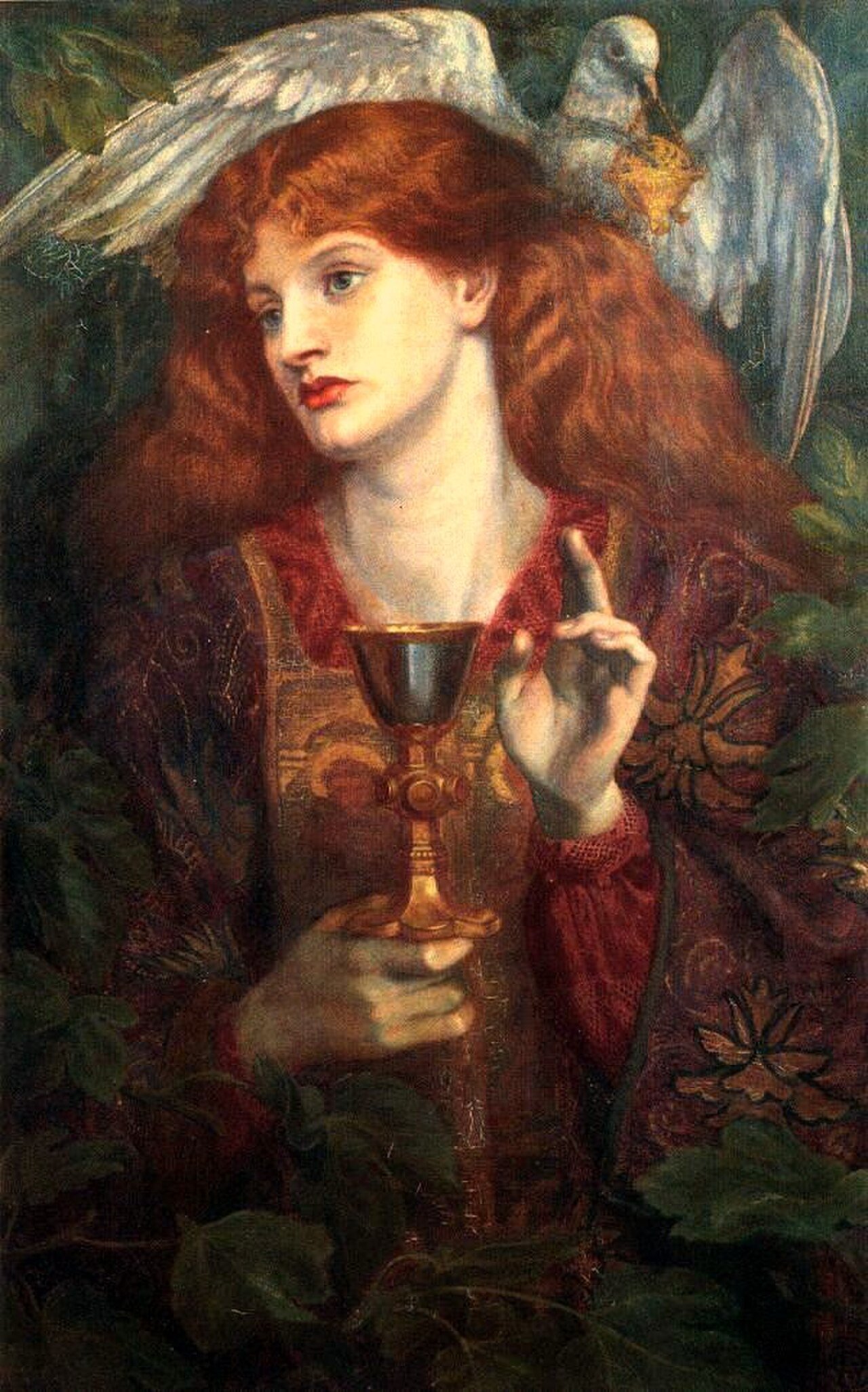
Few objects in human history have inspired as much fascination as the Holy Grail. It has been described as a sacred cup, a divine relic, a mystical treasure, a source of eternal life, and even a symbol of spiritual enlightenment. For centuries, knights, kings, scholars, adventurers, and dreamers have searched for it. Entire legends have been built around its supposed power. Books have been written about it, films have turned it into an icon of adventure, and historians continue to debate whether it ever existed at all.
What makes the Holy Grail so remarkable is that it sits at the crossroads of history, religion, mythology, literature, and human imagination. Unlike many famous relics, the Grail is difficult to define. Ask ten people what the Holy Grail is, and you may receive ten different answers. Some believe it was the cup used by Jesus Christ at the Last Supper. Others think it was a vessel that caught Christ’s blood during the Crucifixion. Some see it as a purely symbolic object representing divine grace. Others suspect it may have originated as a myth unrelated to Christianity.
The mystery has endured because the Holy Grail exists in a strange space between fact and fiction. It is one of the most famous objects in the world, yet no one can prove exactly what it is or where it came from.
The story of the Holy Grail is not merely about a missing artifact. It is also about humanity’s search for meaning, faith, perfection, and transcendence. In many ways, the Grail reflects our deepest hopes and questions about existence itself.
The First Appearance of the Grail
Surprisingly, the Holy Grail does not appear in the Bible.
Many people assume that because the Grail is associated with Jesus, it must be mentioned in the New Testament. Yet the scriptures never refer to a mysterious object called the Holy Grail. The cup used during the Last Supper is mentioned, but it is not described as possessing magical powers or becoming the subject of future quests.
The Grail first emerges much later, during the Middle Ages.
Its earliest known appearance comes from a poem written around the late twelfth century by the French writer Chrétien de Troyes. In his unfinished work, Perceval, the Story of the Grail, the Grail is not even clearly identified as a cup. Instead, it appears as a mysterious and wondrous object carried during a strange procession.
In the story, a young knight named Perceval visits the castle of the Fisher King. There he witnesses an enigmatic ceremony involving a lance and a grail. Perceval fails to ask questions about what he has seen, and this failure becomes central to the narrative.
What is remarkable about Chrétien’s version is that the Grail is not yet fully Christian. It is mysterious, magical, and symbolic, but its exact meaning remains unclear.
This ambiguity would prove crucial. Because the Grail was not rigidly defined, later writers could reshape it in new and increasingly elaborate ways.
How the Grail Became Christian
After Chrétien introduced the Grail, other medieval writers expanded the story.
One of the most influential was Robert de Boron. Writing around the end of the twelfth century, Robert transformed the Grail into a specifically Christian relic.
According to his version, the Grail was the cup used by Jesus during the Last Supper. After the Crucifixion, Joseph of Arimathea supposedly collected Christ’s blood in the vessel. The cup then became a sacred relic possessing extraordinary spiritual significance.
This interpretation changed everything.
The Grail was no longer merely a mysterious object from a knightly tale. It became directly connected to the central events of Christianity.
As the story spread across Europe, the Grail became increasingly associated with holiness, purity, divine favor, and spiritual transformation.
The search for the Grail evolved into more than an adventure. It became a sacred quest.
The Age of Arthurian Legends
The Holy Grail found its natural home within the legends of King Arthur.
During the Middle Ages, stories about Arthur, Camelot, and the Knights of the Round Table became enormously popular. Writers expanded these tales into vast cycles of interconnected adventures.
The Grail soon became one of the most important elements of the Arthurian world.
In many versions of the legend, the knights undertake a quest to find the Grail. Yet not every knight is worthy of success. Courage alone is not enough. Physical strength is not enough. Noble birth is not enough.
The Grail can only be attained by someone possessing exceptional spiritual purity.
This idea transformed the quest into a moral journey.
The knights are not simply traveling across forests and mountains. They are confronting their own flaws, temptations, fears, and weaknesses.
The most successful Grail knight eventually became Galahad, often portrayed as the purest and most virtuous member of the Round Table. Unlike many other knights, Galahad’s spiritual perfection allows him to achieve what others cannot.
Through these stories, the Grail became a symbol of humanity’s search for something greater than worldly power.
The Symbolism Behind the Grail
One reason the Holy Grail remains fascinating is that it operates on multiple levels at once.
As a literal object, it is a sacred vessel linked to Jesus.
As a literary device, it drives epic adventures.
As a religious symbol, it represents divine grace.
As a psychological symbol, it represents the search for fulfillment.
This flexibility allows people from different backgrounds to interpret the Grail in different ways.
For some believers, the Grail represents a genuine holy relic. For others, it symbolizes spiritual enlightenment. Some view it as a metaphor for self-discovery. Others see it as an expression of humanity’s longing for perfection.
Unlike many myths that remain fixed in meaning, the Grail adapts to each generation.
Its power comes partly from its mystery.
The less certain people become about what it is, the more possibilities emerge.
Did the Last Supper Cup Really Survive?
One of the biggest questions surrounding the Grail concerns the Last Supper itself.
If Jesus used a cup during the meal with his disciples, what happened to it afterward?
The New Testament does not tell us.
No contemporary historical source traces the fate of the vessel.
This silence leaves room for speculation.
Over the centuries, various churches and institutions have claimed to possess the authentic cup from the Last Supper. Some relics have attracted widespread devotion and attention.
Yet proving such claims is extraordinarily difficult.
Objects from the first century rarely survive intact. Even when they do, establishing an unbroken chain of ownership across two thousand years is nearly impossible.
As a result, historians remain cautious.
While it is entirely possible that a cup was used during the Last Supper, there is currently no definitive evidence identifying any surviving artifact as that vessel.
The Holy Chalice of Valencia
Among the various relics associated with the Grail, one of the most famous is the Holy Chalice preserved in Valencia Cathedral.
This cup consists of a polished agate bowl mounted on a later medieval base.
Supporters argue that the upper portion could date to the period of Jesus.
The relic has a long and complex history. According to tradition, it traveled from Jerusalem to Rome and later to Spain.
Some historians acknowledge that the cup’s age may be consistent with the era in which Jesus lived. However, this does not prove it was actually used at the Last Supper.
The gap between possibility and proof remains enormous.
Still, the Valencia Chalice continues to attract pilgrims, scholars, and curious visitors from around the world.
For many, it remains one of the strongest candidates for the historical Grail.
The Grail and Medieval Imagination
To understand the Holy Grail, it is important to appreciate the medieval world in which the legend flourished.
Medieval Europe was deeply religious. Relics held tremendous significance. Objects believed to be connected to saints or biblical events attracted pilgrims and inspired devotion.
At the same time, medieval audiences loved stories of knights, magic, and heroic adventures.
The Grail combined both interests perfectly.
It offered sacred meaning alongside thrilling storytelling.
Readers could enjoy tales of enchanted castles, mysterious visions, and dangerous journeys while also contemplating spiritual themes.
This combination helped the Grail spread rapidly across Europe.
It became one of the defining symbols of medieval literature.
The Fisher King and the Wounded Land
One of the most intriguing elements of Grail mythology is the figure of the Fisher King.
The Fisher King is often portrayed as a ruler suffering from a mysterious wound. His injury is linked to the condition of his kingdom.
As long as the king remains wounded, the land itself becomes barren and unhealthy.
Only the successful completion of the Grail quest can restore both king and kingdom.
This story resonates on a deeply symbolic level.
The wounded king represents brokenness.
The damaged kingdom reflects disorder and suffering.
The Grail represents healing and renewal.
Many scholars believe this theme may preserve ancient mythological ideas that predate Christianity.
The connection between a ruler’s condition and the fertility of the land appears in numerous cultures throughout history.
This suggests that the Grail legend may have absorbed older traditions and transformed them within a Christian framework.
Possible Celtic Origins
Not all scholars believe the Grail originated from Christian traditions.
Some researchers argue that elements of the legend may have roots in Celtic mythology.
Ancient Celtic stories often feature magical cauldrons capable of providing endless food, restoring life, or granting wisdom.
These vessels sometimes possess qualities remarkably similar to those later associated with the Grail.
The similarities have led some scholars to suspect that medieval writers adapted older mythological themes and integrated them into Christian narratives.
If true, the Holy Grail may represent a fascinating fusion of religious traditions.
Rather than emerging from a single source, it could be the product of centuries of cultural blending.
This possibility highlights how myths evolve over time, absorbing influences from different societies and beliefs.
The Crusades and the Search for Sacred Objects
The rise of Grail stories coincided with an era when Europeans were intensely interested in sacred relics.
The Crusades brought thousands of travelers into contact with the Holy Land.
Pilgrims, soldiers, and merchants returned with stories of ancient sites and holy artifacts.
The idea that extraordinary relics might still exist captured the medieval imagination.
The Grail fit naturally into this environment.
People were already searching for fragments of the True Cross, saints’ bones, and biblical objects.
A sacred cup connected to Jesus seemed entirely plausible.
The widespread fascination with relics helped fuel belief in the possibility that the Grail might be real.
Secret Societies and Conspiracy Theories
In modern times, the Grail has become associated with numerous conspiracy theories.
Some claim that secret organizations have hidden the Grail for centuries.
Others argue that powerful groups protect ancient secrets connected to it.
These ideas gained enormous popularity through novels, documentaries, and films.
One particularly influential interpretation suggests that the Grail is not actually a cup at all.
Instead, it allegedly represents a bloodline descended from Jesus.
While such theories are intriguing, historians generally find little evidence supporting them.
Most rely on speculative interpretations, questionable documents, or imaginative leaps rather than solid historical proof.
Yet their popularity demonstrates the enduring appeal of the Grail mystery.
People are naturally drawn to hidden secrets and lost treasures.
The Grail offers both.
The Grail in Modern Literature
The Holy Grail did not disappear after the Middle Ages.
Instead, it continued evolving.
Writers repeatedly reinvented the legend for new audiences.
In the nineteenth century, renewed interest in medieval themes brought the Grail back into popular culture.
Poets, novelists, and artists explored its symbolism.
Some emphasized its religious significance.
Others focused on personal transformation and spiritual searching.
The Grail became a timeless metaphor rather than merely a medieval relic.
Its meaning expanded beyond its original context.
The Grail in Popular Culture
Modern audiences often encounter the Grail through films, television, and novels.
Adventure stories frequently portray it as a lost artifact hidden in remote locations.
Treasure hunters race to find it.
Ancient clues must be deciphered.
Deadly traps guard its resting place.
These stories have become cultural classics because they tap into universal themes.
The Grail represents mystery.
It represents discovery.
It represents the possibility that extraordinary truths remain hidden beneath ordinary reality.
Although these fictional portrayals often take historical liberties, they help keep the legend alive.
Each generation discovers the Grail in a new form.
Why People Never Stop Searching
One might wonder why the Holy Grail continues to fascinate people after so many centuries.
Part of the answer lies in human psychology.
People are naturally drawn to mysteries.
A solved mystery often loses its power.
An unsolved mystery invites endless imagination.
The Grail is perhaps the ultimate unsolved mystery.
No definitive answer exists.
No universally accepted location has been identified.
No artifact has been proven beyond doubt.
This uncertainty keeps the story alive.
Every possibility remains open.
Every generation can revisit the question.
The Grail as a Spiritual Journey
Many modern scholars argue that the true significance of the Grail lies not in finding a physical object but in understanding its symbolic meaning.
In medieval stories, successful Grail seekers undergo profound personal transformation.
They become wiser, purer, and more spiritually aware.
The quest changes them.
In this sense, the Grail resembles a spiritual destination rather than a treasure.
The journey matters as much as the goal.
This interpretation explains why the legend remains relevant even for people who do not believe in the literal existence of the Grail.
The search for truth, purpose, and meaning is a universal human experience.
The Grail serves as a powerful metaphor for that search.
Could the Grail Be Hidden in Plain Sight?
One of the most intriguing possibilities is that the Grail may already be visible to the world.
Perhaps a genuine ancient cup survives in a church treasury.
Perhaps a relic displayed to visitors is far more important than anyone realizes.
Perhaps historians have overlooked critical evidence.
Alternatively, the phrase “hidden in plain sight” may have a symbolic meaning.
The Grail could represent qualities that people constantly seek elsewhere despite carrying them within themselves.
Faith.
Wisdom.
Compassion.
Transformation.
These interpretations shift the focus away from archaeology and toward human experience.
The Grail becomes less about location and more about understanding.
What Historians Actually Think
Most professional historians approach the Holy Grail with caution.
There is strong evidence that Grail legends developed within medieval literature.
There is no direct historical evidence linking the complete Grail tradition to the first century.
The connection between the Grail and Jesus appears to have emerged gradually through later storytelling.
At the same time, historians do not dismiss the possibility that certain traditions may preserve echoes of genuine historical objects or events.
Ancient cups certainly existed.
Relics associated with biblical figures were highly valued.
Some surviving artifacts may indeed be very old.
The challenge is separating historical evidence from centuries of legend.
That task remains extraordinarily difficult.
The Enduring Legacy of the Holy Grail
Whether real or imagined, the Holy Grail has achieved something remarkable.
It has survived for more than eight hundred years as one of humanity’s most powerful symbols.
Few legends have shown such adaptability.
The Grail has been a sacred relic, a magical treasure, a literary device, a spiritual metaphor, a historical mystery, and a cultural icon.
It continues to inspire scholars, believers, writers, filmmakers, and adventurers.
Its story has crossed languages, religions, and continents.
The Grail endures because it speaks to something fundamental within human nature.
It embodies hope.
It embodies curiosity.
It embodies the belief that something extraordinary may still be waiting to be discovered.
Conclusion
The Holy Grail occupies a unique place in human history. It stands at the boundary between faith and folklore, between documented history and imaginative storytelling. Although many people associate it with the cup used by Jesus Christ at the Last Supper, the Grail as we know it emerged primarily through medieval literature, where it evolved into a symbol of divine mystery and spiritual transformation.
No definitive evidence has proven the existence of the Holy Grail as a specific historical object. Various relics have been proposed, and numerous theories continue to circulate, but certainty remains elusive. Historians generally view the Grail as a legend shaped by centuries of storytelling, religious devotion, and cultural influence.
Yet focusing solely on whether the Grail physically exists may miss the deeper significance of the legend. For generations, the Grail has represented humanity’s search for truth, healing, wisdom, purpose, and connection with something greater than ourselves.
Perhaps that is why the mystery refuses to die.
The Holy Grail may be a forgotten relic hidden somewhere in the world. It may be a literary creation born from medieval imagination. It may be a blend of both history and myth.
Or perhaps the true power of the Grail lies not in being found, but in inspiring the search itself. For as long as people continue asking questions, seeking meaning, and dreaming of hidden wonders, the quest for the Holy Grail will never truly end.