The sea is often described as the final frontier on Earth, a vast and mysterious realm hiding secrets beneath its waves. While mountains, deserts, and forests have yielded countless archaeological treasures, some of humanity’s most astonishing discoveries have emerged from places where few expected them to survive: underwater cities.
Across the globe, entire settlements now lie beneath oceans, seas, lakes, and rivers. Some were swallowed by rising sea levels after the last Ice Age. Others sank because of earthquakes, tsunamis, coastal erosion, or gradual geological changes. For centuries, these lost cities existed only in myths, legends, and scattered historical records. Then divers, archaeologists, and underwater explorers began uncovering evidence that these forgotten worlds were real.
What makes these discoveries particularly remarkable is not simply the cities themselves, but the artifacts preserved within them. Hidden beneath layers of sand and sediment, protected from sunlight and human disturbance, many objects survived for centuries or even millennia. These artifacts offer rare glimpses into ancient lives, beliefs, technologies, and cultures.
From statues and temples to coins, tools, and sacred inscriptions, each artifact tells a story. Together, they reveal that beneath the waves lie chapters of human history that were once thought lost forever.
1. The Giant Statues of Thonis-Heracleion, Egypt
One of the most spectacular underwater archaeological discoveries ever made emerged from the sunken Egyptian city of Thonis-Heracleion in Abu Qir Bay near Alexandria.
For centuries, the city was considered legendary. Ancient texts described it as a thriving port connecting Egypt with the Mediterranean world. Then, around the eighth century CE, a combination of earthquakes, soil liquefaction, and rising waters caused the city to collapse beneath the sea.
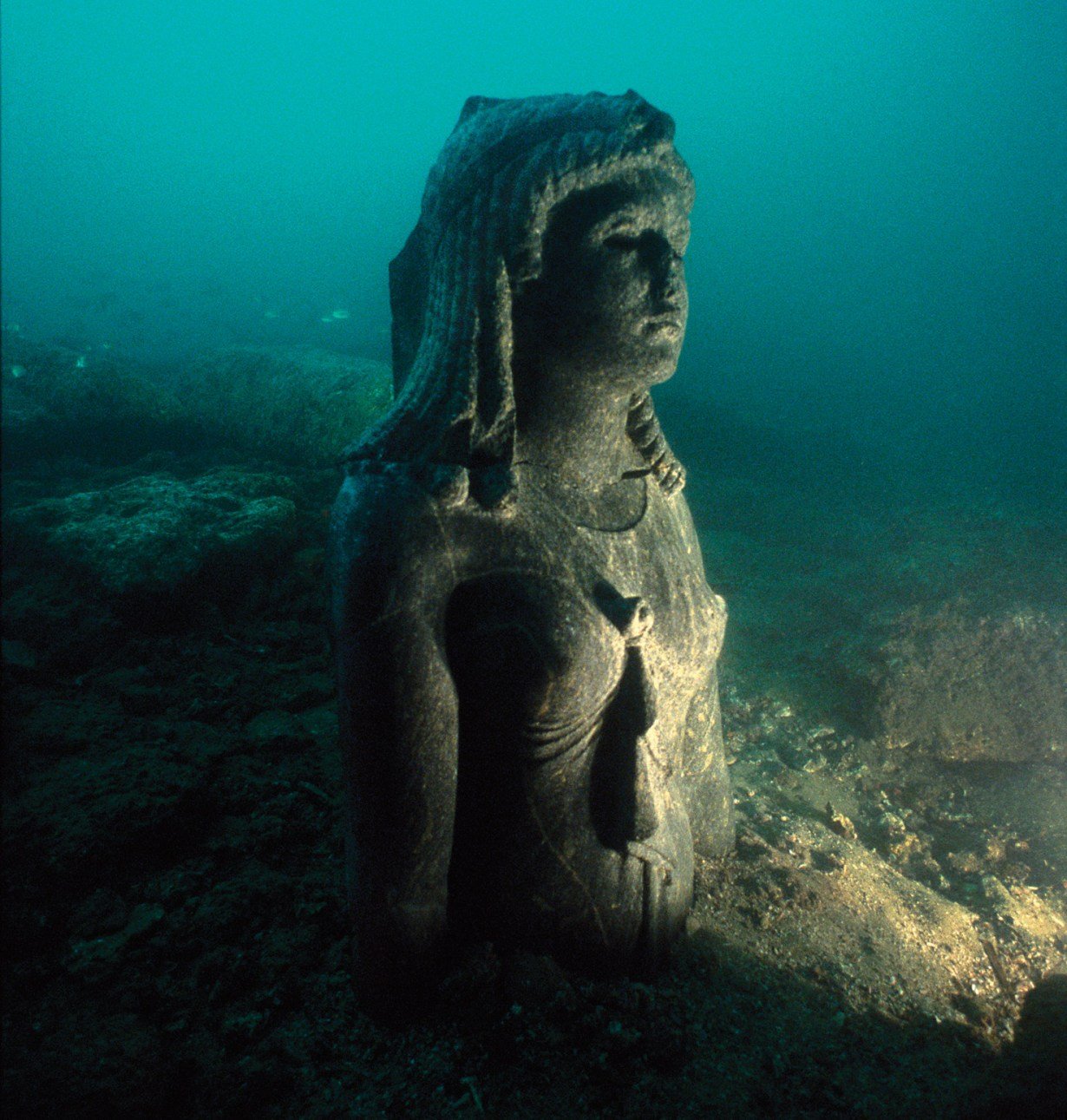
When underwater archaeologists rediscovered the site in 2000, they found colossal statues resting on the seabed.
Among the most extraordinary artifacts were enormous granite statues standing over five meters tall. These sculptures depicted Egyptian pharaohs, queens, and gods. Despite spending more than a thousand years underwater, many remained remarkably intact.
The statues reveal the immense wealth and artistic sophistication of ancient Egypt. Their scale suggests they once stood at temple entrances, greeting merchants, sailors, and pilgrims arriving from distant lands.
Seeing these massive figures emerge from the sea was like witnessing an ancient civilization awaken after centuries of silence.
2. The Temple Treasures of Thonis-Heracleion
The same city yielded another breathtaking collection of artifacts: sacred temple objects.
Divers recovered ritual vessels, bronze statues, ceremonial tools, and religious offerings from temple complexes dedicated to Egyptian deities.
Many objects were found exactly where priests had used them before the city disappeared beneath the waves.
Among the discoveries were beautifully crafted bronze figures representing gods and sacred animals. Some still retained intricate details despite centuries underwater.
These artifacts transformed historians’ understanding of religious life in the city and provided direct evidence of rituals previously known only from texts.
3. The Marble Streets of Pavlopetri, Greece
Off the coast of southern Greece lies Pavlopetri, often considered the oldest known submerged city in the world.
Dating back roughly 5,000 years, the city offers an astonishing glimpse into Bronze Age urban life.
One remarkable category of artifacts discovered there consists of architectural remains, including stone streets, building foundations, courtyards, and tombs.
Although not portable artifacts in the traditional sense, these structures are invaluable archaeological treasures.
The preserved layout allows researchers to study urban planning from an era long before classical Greece emerged. Walking virtually through maps of Pavlopetri feels like stepping into a lost world frozen in time.
The city’s submerged architecture demonstrates that sophisticated urban communities existed thousands of years earlier than many people imagine.
4. Bronze Age Pottery from Pavlopetri
Among the most informative discoveries at Pavlopetri are ceramic artifacts.
Archaeologists uncovered storage jars, cooking vessels, and decorative pottery dating to the Bronze Age.
These objects provide clues about trade, diet, daily life, and cultural connections across the Mediterranean.
Pottery fragments may seem ordinary compared to golden treasures, but for archaeologists they are often among the most valuable artifacts. Each piece contains information about manufacturing techniques, trade networks, and social customs.
The pottery of Pavlopetri reveals a thriving maritime community connected to broader regional economies.
5. The Lion Statues of Canopus
Near Thonis-Heracleion lies another submerged Egyptian city: Canopus.
Once famous throughout the ancient Mediterranean, Canopus was a center of worship, commerce, and entertainment.
Among its most impressive discoveries are statues of lions carved from stone.
In ancient Egypt, lions symbolized power, protection, and divine authority. The underwater lion sculptures likely guarded temples or important civic spaces.
When archaeologists first encountered them beneath layers of sediment, it became clear that Canopus had once been a city of considerable wealth and prestige.
These majestic statues continue to inspire awe even after centuries beneath the sea.
6. The Sacred Osiris Artifacts
Canopus and Thonis-Heracleion produced numerous artifacts associated with the worship of Osiris, one of Egypt’s most important gods.
Among these discoveries were ritual containers, ceremonial vessels, and religious inscriptions.
The artifacts shed light on annual sacred festivals that attracted visitors from across Egypt.
Historical sources described elaborate ceremonies celebrating Osiris, but underwater archaeology provided tangible evidence of those traditions.
Holding an object once used in rituals thousands of years ago creates a direct connection between the modern world and ancient spiritual beliefs.
7. The Ancient Coins of Baiae, Italy
Along Italy’s western coast lies Baiae, often called the “Las Vegas of Ancient Rome.”
The city was famous for luxury villas, lavish parties, and wealthy residents.
Over centuries, volcanic activity caused much of Baiae to sink beneath the sea.
Among the artifacts discovered there are countless Roman coins.
These coins are more than simple currency. They feature portraits of emperors, political symbols, and inscriptions that help historians date archaeological layers with remarkable accuracy.
Coins recovered from underwater neighborhoods reveal patterns of trade, economic activity, and daily transactions.
They remind us that beneath the glamorous reputation of Baiae existed a bustling community engaged in ordinary economic life.
8. The Mosaics of Baiae
Perhaps the most visually stunning artifacts from Baiae are its mosaics.
Many underwater floors retain intricate decorative designs created from thousands of colored stone pieces.
The craftsmanship is extraordinary.
Scenes include geometric patterns, marine imagery, and artistic motifs popular among wealthy Romans.
These mosaics survived because seawater covered them before extensive looting or destruction could occur.
Today they offer a rare glimpse into the elegance and luxury enjoyed by Rome’s elite nearly two thousand years ago.
9. The Stone Anchors of Dwarka, India
The underwater ruins near Dwarka on India’s western coast have generated enormous interest among archaeologists.
While debates continue regarding aspects of the site’s interpretation, discoveries from the area include numerous ancient stone anchors.
These anchors represent important evidence of maritime activity and seafaring traditions.
Carved with carefully designed holes for ropes and wooden components, they reveal sophisticated nautical knowledge.
The anchors suggest the presence of an active port connected to regional and international trade routes.
Each anchor serves as a reminder that ancient civilizations depended heavily on the sea for commerce, communication, and cultural exchange.
10. The Harbor Structures of Dwarka
Another extraordinary discovery consists of submerged harbor features.
Stone blocks, walls, and structural remains indicate efforts to manage maritime traffic and coastal infrastructure.
These artifacts suggest advanced engineering capabilities.
Harbors are among the most important indicators of urban development because they facilitate trade, travel, and economic growth.
The underwater remains of Dwarka hint at a city deeply connected to the ocean and dependent upon maritime commerce.
11. The Bronze Statues of Shi Cheng, China
Beneath the waters of Qiandao Lake in China lies Shi Cheng, often called the “Lion City.”
Unlike many ancient underwater cities, Shi Cheng did not disappear naturally. It was intentionally flooded in 1959 during the construction of a hydroelectric project.
The flooding unexpectedly preserved an extraordinary historical landscape.
Among the remarkable artifacts found there are bronze statues and decorative sculptures.
Protected by freshwater conditions, many pieces remain exceptionally well preserved.
The statues provide insights into Chinese artistic traditions and urban culture during the Ming and Qing dynasties.
Their survival demonstrates how submerged environments can sometimes preserve history better than exposure on land.
12. Stone Carvings of Shi Cheng
The city is famous for its elaborate stone carvings.
Doorways, arches, walls, and public buildings display intricate decorative motifs featuring dragons, flowers, mythical creatures, and symbolic imagery.
These carvings are essentially giant artistic artifacts embedded within the architecture itself.
Divers exploring the city often describe it as entering a submerged museum.
The carvings preserve details that might have been damaged by weathering had the city remained above water.
Today they represent one of the world’s most remarkable examples of preserved historical architecture.
13. The Monuments of Port Royal, Jamaica
Port Royal was once one of the richest and most notorious cities in the Caribbean.
Known for piracy, trade, and immense wealth, it suffered catastrophe in 1692 when a devastating earthquake caused much of the city to sink into the sea.
Archaeologists have recovered numerous artifacts from the submerged ruins.
Among the most significant are monuments, building remains, and civic structures preserved in underwater sediments.
These discoveries provide a rare snapshot of life in a colonial port city at a specific moment in history.
Because the destruction occurred so suddenly, many objects remained exactly where they were when disaster struck.
14. Everyday Objects from Port Royal
While gold and treasure often capture public attention, some of the most valuable discoveries from Port Royal are ordinary household objects.
Archaeologists recovered ceramics, utensils, bottles, tools, and personal belongings.
These items reveal details about diet, trade, social status, and daily routines.
A simple clay pipe or broken plate can tell historians far more about ordinary life than a chest of coins.
The artifacts paint a vivid picture of a bustling city filled with merchants, sailors, craftsmen, and families.
Their stories survived because the sea preserved what time might otherwise have erased.
15. The Yonaguni Stone Structures, Japan
Near Japan’s Yonaguni Island lies one of the most controversial underwater archaeological sites in the world.
The massive submerged stone formations discovered there have inspired decades of debate.
Some researchers argue that the structures are natural geological formations, while others suggest at least some features may have been modified by humans.
Regardless of the interpretation, the site remains one of the most fascinating underwater discoveries ever made.
The enormous terraces, stair-like formations, and carved-looking surfaces create an unforgettable underwater landscape.
If human involvement is eventually confirmed, the structures could dramatically reshape understanding of prehistoric societies in the region.
Even without definitive answers, the site demonstrates how much remains hidden beneath the oceans.
Why Underwater Artifacts Matter
Underwater artifacts are not merely curiosities recovered from the seabed. They are vital pieces of human history.
Unlike many archaeological sites on land, underwater environments can preserve objects in unique ways. Sediment often protects artifacts from weather, agriculture, construction, and looting.
As a result, archaeologists sometimes discover entire streets, buildings, and collections of objects exactly where they were left centuries ago.
These discoveries provide unusually detailed snapshots of ancient life.
A submerged city can preserve a moment in time much like a photograph captures a single instant. Researchers gain opportunities to study communities with extraordinary precision.
Every recovered artifact adds another chapter to humanity’s story.
The Challenges of Underwater Archaeology
Recovering artifacts from underwater cities is far more difficult than traditional excavation.
Divers must contend with darkness, strong currents, limited visibility, and immense pressure.
Delicate objects often require specialized conservation techniques immediately after recovery. Materials that survive underwater for centuries can deteriorate rapidly once exposed to air.
The work demands patience, expertise, and advanced technology.
Modern underwater archaeologists employ sonar mapping, remotely operated vehicles, 3D imaging systems, and sophisticated excavation tools.
These innovations have transformed the field, allowing researchers to explore sites that were previously inaccessible.
Yet despite these advances, vast portions of the world’s underwater cultural heritage remain undiscovered.
The Lost Cities Beneath the Waves
The artifacts found in underwater cities are among the most powerful reminders of humanity’s fragile relationship with nature.
Great ports became seabeds. Prosperous neighborhoods vanished beneath waves. Temples, markets, homes, and monuments disappeared from view for centuries.
Yet the sea did not erase them completely.
Instead, it preserved fragments of countless human stories waiting to be rediscovered.
The giant statues of Egypt, the mosaics of Roman luxury, the Bronze Age pottery of Greece, the carved gateways of China, and the household objects of Port Royal all share a common thread. They survived against overwhelming odds.
Each artifact is a messenger from another time.
Together they reveal that beneath the world’s oceans lies a hidden archive of human civilization. Every dive, every excavation, and every new discovery reminds us that history is far larger than what survives on land. Some of humanity’s greatest treasures are still resting silently beneath the waves, waiting for the day they once again see the light.