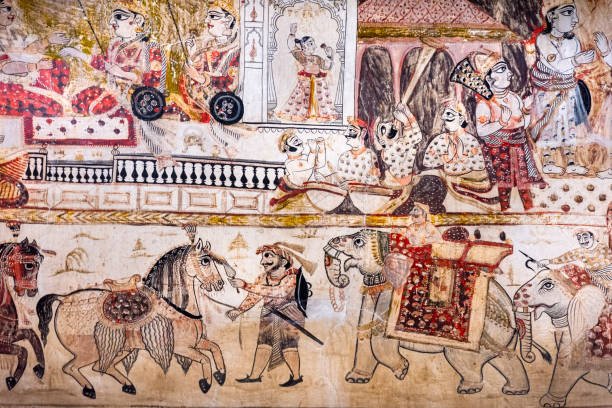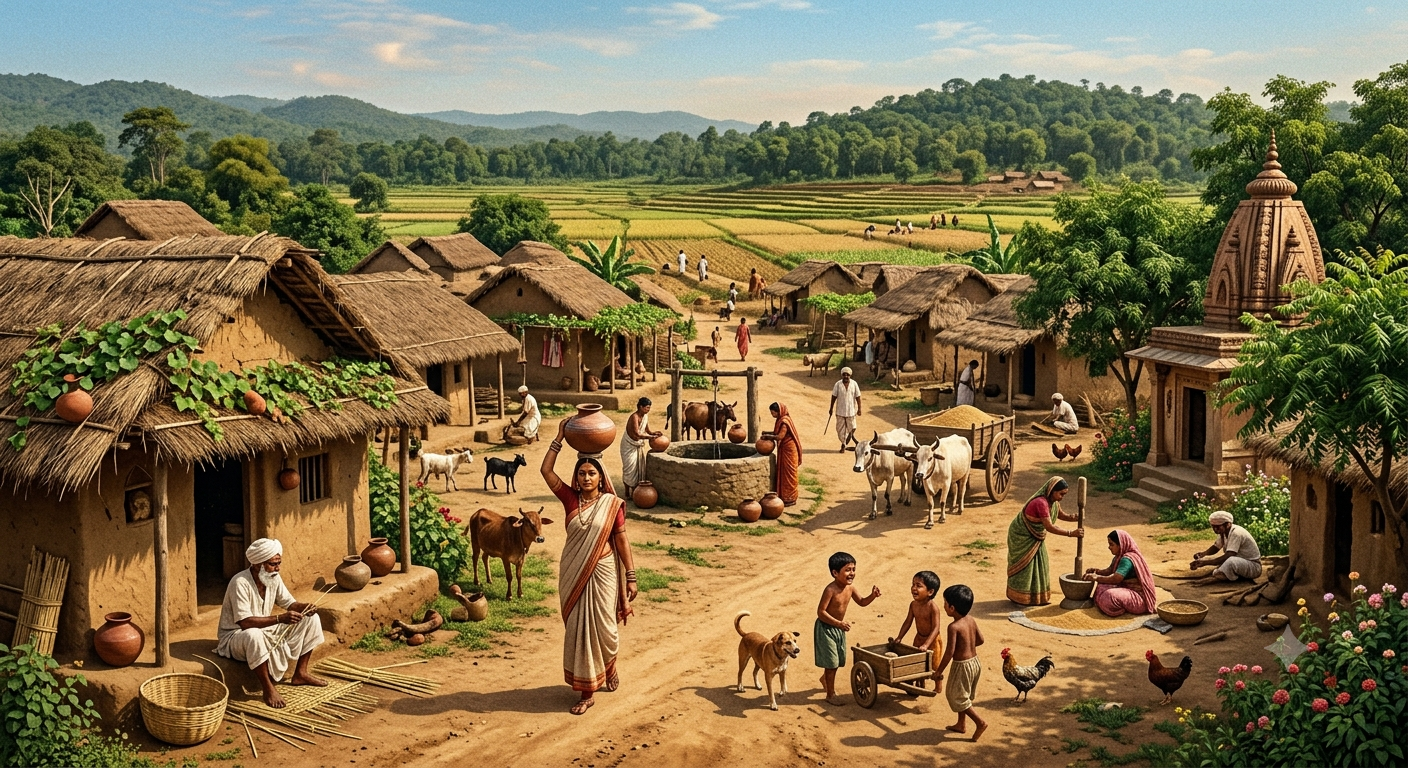
The first rays of sunlight spread across the fields as birds begin their morning songs. Smoke rises gently from clay ovens, women grind grain for breakfast, farmers prepare their oxen for the day’s work, and children carry water from the village well. Long before bustling modern cities, railways, and highways, this was how another day began for millions of ordinary people across ancient India.
When people think of ancient India, they often imagine magnificent temples, powerful kings, grand palaces, scholars debating philosophy, or bustling cities connected by trade. These were indeed important parts of India’s rich past. Yet they represented only a small part of society. Most people were neither kings nor priests, neither famous philosophers nor wealthy merchants. They were farmers, craftsmen, herders, fishermen, potters, weavers, laborers, and traders whose lives quietly sustained one of the world’s oldest continuous civilizations.
Ancient India stretched across thousands of years, from the cities of the Indus Valley Civilization through the Vedic period and later powerful kingdoms such as the Maurya and Gupta Empires. Daily life naturally changed over time and varied greatly from one region to another. A farmer living near the fertile Ganges River experienced life differently from a fisherman on India’s southern coast or a shepherd in the dry northwest.
Even so, many aspects of everyday life remained remarkably familiar. Family, farming, religion, trade, and community shaped the rhythm of ordinary existence.
A World Built Around Villages
For most of ancient Indian history, villages formed the heart of society.
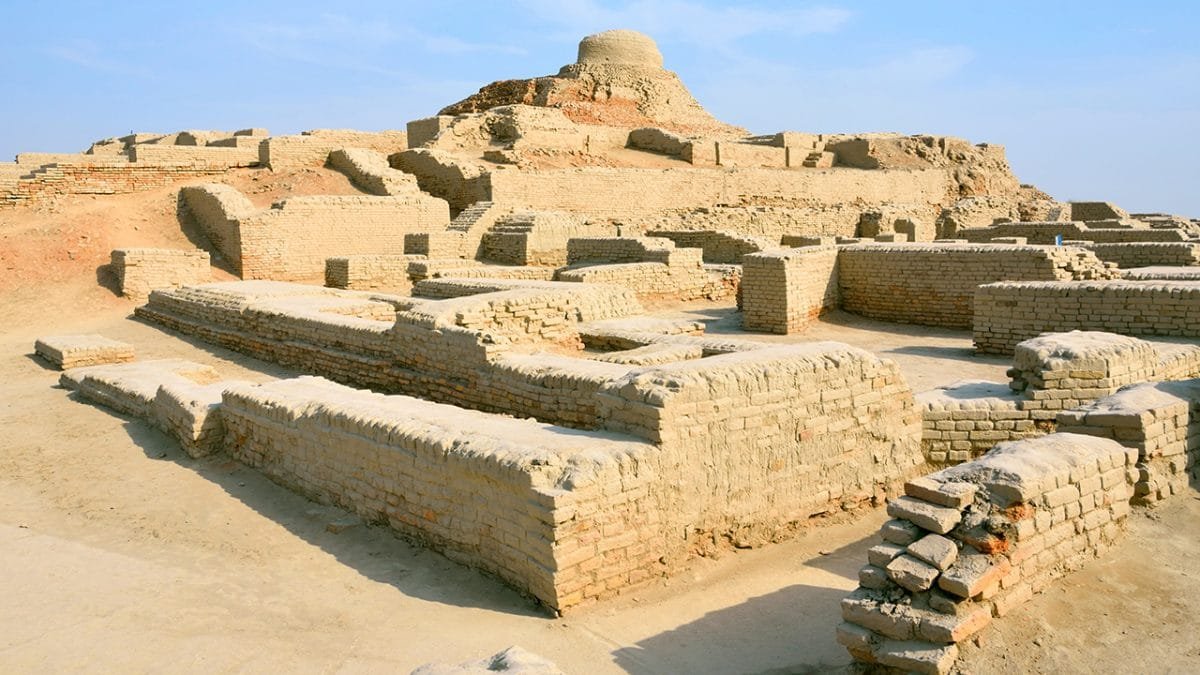
Although impressive cities flourished at different times—including the carefully planned urban centers of the Indus Valley Civilization and later capitals such as Pataliputra—most people lived in small rural settlements surrounded by farmland.
Villages were usually established near rivers, ponds, wells, or fertile plains where crops could grow successfully. Water was essential not only for drinking but also for irrigation, cooking, bathing, caring for animals, and making pottery.
The village was far more than a collection of homes. It was a close-knit community where families worked together, celebrated festivals, solved disputes, and helped one another during difficult times.
Many people spent their entire lives within a few kilometers of the place where they were born.
Homes Were Humble but Comfortable
The houses of ordinary families were practical rather than luxurious.
Most were built using materials available nearby. Clay, mud bricks, bamboo, timber, reeds, and thatched grass were commonly used, depending on local climate and resources.
In many villages, walls were made of packed earth coated with mud plaster that helped keep homes cool during the hot summer months. Roofs were often covered with straw or dried grasses, although wealthier households might use baked clay tiles.
Inside, homes were simple.
Furniture was limited. Families usually sat on woven mats while eating or working. Cooking took place over clay stoves fueled by wood, dried animal dung, or crop residues.
Storage jars filled with grain, oil, spices, and water occupied important places inside the house, helping families survive between harvests.
The Day Began Before Sunrise
Ancient Indian villages awoke early.
Before the Sun climbed into the sky, families had already begun their work.
Women often prepared the morning meal, cleaned the household, collected water, and cared for young children.
Men prepared farming tools, harnessed oxen, or gathered equipment needed for the day’s labor.
Children also had responsibilities.
Some helped feed animals, collected firewood, watched younger brothers and sisters, or assisted their parents in the fields.
Life followed the rhythm of daylight.
Without electric lights, most work was completed between sunrise and sunset.
Farming Was the Foundation of Life
Agriculture supported nearly every kingdom, town, and village.
Most common people earned their living by cultivating the land.
The crops varied across India’s diverse landscapes.
Rice flourished in regions with abundant rainfall and river systems.
Wheat and barley were important in northern India.
Millets provided reliable harvests in drier regions.
Farmers also cultivated lentils, peas, sesame, sugarcane, cotton, and numerous fruits and vegetables.
Oxen pulled wooden plows through the fields, while irrigation canals, wells, reservoirs, and seasonal rains helped nourish crops.
The arrival of the monsoon was especially important.
A good monsoon often meant abundant harvests.
A failed monsoon could bring food shortages and hardship.
The Importance of the Monsoon
Few natural events shaped daily life more than the annual monsoon.
These seasonal winds bring heavy rainfall to much of the Indian subcontinent, replenishing rivers, filling reservoirs, and watering fields.
For ancient farmers, the timing and strength of the monsoon could determine whether crops flourished or failed.
People carefully observed the skies, winds, birds, and changing seasons, hoping for favorable weather.
Even today, the monsoon remains one of the most important influences on agriculture across South Asia.
Meals Were Simple but Flavorful
The food eaten by ordinary families depended largely on where they lived and what they could grow.
Grains formed the basis of most meals.
Rice dominated many southern and eastern regions, while wheat and barley were more common in parts of northern India.
Lentils and beans supplied valuable protein and were often cooked into thick stews.
Vegetables such as onions, gourds, eggplants, leafy greens, cucumbers, and radishes appeared frequently.
Milk, yogurt, butter, and clarified butter known as ghee came from cattle, buffaloes, or goats and played important roles in many diets.
Spices gradually became defining features of Indian cooking.
Black pepper, turmeric, cumin, coriander, ginger, mustard seeds, and other seasonings added flavor and aroma while also helping preserve food in hot climates.
Meat consumption varied widely depending on region, community, religious beliefs, and historical period. Many people ate largely plant-based diets, while others occasionally consumed fish, poultry, or other meats.
Clothing Reflected Climate and Simplicity
India’s warm climate influenced everyday clothing.
Cotton, first cultivated on a large scale in the Indian subcontinent thousands of years ago, became one of the most important textiles.
Men commonly wore wrapped garments around the waist, while women wore long pieces of cloth draped in different regional styles. These early garments gradually evolved into clothing traditions that influenced later attire such as the sari and dhoti.
People also wore shawls during cooler seasons.
Jewelry was popular even among ordinary families.
Simple ornaments made from clay, shell, copper, beads, terracotta, or semi-precious stones have been discovered at archaeological sites across ancient India.
Family Was the Center of Society
The family shaped nearly every aspect of daily life.
Several generations often lived together, sharing work, food, and responsibilities.
Grandparents helped raise children.
Parents passed on farming skills, crafts, religious traditions, and practical knowledge.
Children learned by watching adults rather than through formal instruction alone.
Respect for elders formed a central value across many communities.
Family celebrations marked births, marriages, religious festivals, and important stages of life.
Strong family networks also provided support during illness, poor harvests, or other hardships.
Work Beyond the Fields
Not everyone was a farmer.
Ancient Indian society depended upon countless skilled workers.
Potters shaped clay into cooking vessels, storage jars, lamps, and decorative objects.
Blacksmiths forged farming tools, knives, nails, and household equipment.
Carpenters built homes, carts, furniture, boats, and agricultural implements.
Weavers transformed cotton into cloth.
Stone masons created buildings, temples, sculptures, and monuments.
Goldsmiths, jewelers, leatherworkers, basket makers, and oil pressers all contributed to village economies.
Many crafts were passed from parents to children over generations.
Bustling Markets Connected Communities
Village markets were lively centers of economic and social activity.
Farmers sold grain, vegetables, fruits, milk, and livestock.
Craftsmen displayed pottery, cloth, baskets, jewelry, and metal goods.
Merchants arrived with salt, spices, precious stones, perfumes, medicines, and imported products from distant lands.
Markets were more than places to buy and sell.
They were places where news spread, travelers shared stories, musicians entertained crowds, and families met friends from neighboring villages.
Trade connected even remote communities to the wider world.
Ancient India Was Part of Global Trade
Long before modern shipping routes, ancient India participated in extensive trade networks.
Merchants traveled overland through Central Asia and by sea across the Arabian Sea and the Bay of Bengal.
Indian cotton textiles, spices, ivory, gemstones, beads, and fine craftsmanship were highly valued abroad.
In return, traders brought horses, metals, luxury goods, and ideas from distant civilizations.
Even ordinary villagers sometimes encountered foreign goods through local markets.
Education Was Not the Same for Everyone
Formal education was available, but not universally accessible.
Children from wealthier families or scholarly traditions sometimes studied reading, writing, mathematics, grammar, astronomy, philosophy, and religious literature under experienced teachers.
Learning often took place in gurukulas, where students lived with their teacher while receiving instruction.
For most ordinary families, however, education focused on practical skills.
Children learned farming, weaving, pottery, animal care, construction, or other occupations by working alongside adults.
Knowledge passed naturally from one generation to the next.
Religion Shaped Everyday Life
Religion was woven deeply into daily routines.
Ancient India witnessed the development and growth of several major religious traditions.
The beliefs and practices associated with early Vedic religion gradually evolved into Hindu traditions.
Buddhism emerged during the sixth century BCE through the teachings of Siddhartha Gautama, later known as the Buddha.
Jainism also developed during roughly the same period through the teachings of Mahavira.
Many people visited local shrines, offered prayers, observed seasonal festivals, and honored family traditions.
Religious beliefs influenced ethics, family life, charity, food choices, and community celebrations.
Rather than existing separately from daily life, religion often accompanied ordinary activities from sunrise to bedtime.
Festivals Filled Villages with Joy
Life was demanding, but festivals offered moments of celebration.
Communities gathered to honor seasonal changes, successful harvests, religious occasions, and local traditions.
Music echoed through village streets.
People danced, sang songs, prepared special foods, exchanged gifts, and visited relatives.
Children eagerly anticipated these occasions.
Festivals strengthened social bonds and reminded people that joy could flourish even during lives filled with hard work.
Many celebrations that began in ancient times continue in different forms across India today.
Women Played Essential Roles
Women contributed enormously to family and community life.
They managed households, prepared food, cared for children, fetched water, processed grain, spun thread, wove cloth, tended animals, and often worked in agricultural fields alongside men.
Historical evidence shows considerable variation in women’s roles across different regions, time periods, and social groups.
Some women became respected scholars, poets, philosophers, or rulers, while most devoted themselves to the demanding responsibilities of family life.
Their labor formed an essential foundation of village society.
Water Was Precious
Every village depended upon reliable water sources.
Wells, ponds, rivers, lakes, and reservoirs supplied drinking water and supported farming.
People carefully maintained irrigation systems that carried water to fields during dry seasons.
Some ancient cities built remarkable drainage and water management systems.
The cities of the Indus Valley Civilization, flourishing more than four thousand years ago, featured sophisticated drainage networks, wells, and carefully planned streets that demonstrate an advanced understanding of urban sanitation.
These engineering achievements remain among the greatest accomplishments of the ancient world.
Medicine and Healing
Illness was an unavoidable part of life.
Ancient India developed rich medical traditions, including what later became known as Ayurveda.
Physicians used herbal medicines, dietary advice, surgery in certain cases, massage, and careful observation of symptoms to treat patients.
Texts composed over centuries describe hundreds of medicinal plants and surgical techniques.
Some traditional remedies have been supported by modern scientific research, while others remain subjects of ongoing study.
Without antibiotics or modern hospitals, however, many infections and injuries that are easily treated today could become life-threatening.
Nature Could Be Both Generous and Harsh
The natural environment provided fertile land, forests, rivers, and wildlife.
At the same time, it could also bring floods, droughts, storms, crop failures, and disease.
Farmers depended upon favorable weather.
Communities often cooperated to repair irrigation canals, harvest crops, and recover from natural disasters.
Survival required resilience and mutual support.
The Caste System and Social Organization
Ancient Indian society developed complex systems of social organization that changed significantly over time and varied across regions.
Early Vedic texts describe broad social categories known as varnas. Over many centuries, these interacted with numerous local communities and occupations to form the far more complex network of social groups later known as jatis.
The experiences of ordinary people differed greatly depending on their occupation, region, wealth, and historical period. Social mobility and local customs also varied across different kingdoms and eras.
Modern historians emphasize that ancient Indian society was highly diverse and cannot be fully understood through simple descriptions alone.
Evening Brought Rest
As daylight faded, families gradually returned home.
Animals were fed and secured for the night.
The evening meal brought everyone together after long hours of work.
Without electric lighting, darkness settled quickly.
Oil lamps illuminated homes as parents shared stories, elders recounted family history, and children listened with fascination.
Some evenings were filled with songs or religious prayers.
Others ended in quiet conversation before another early morning awaited.
What Archaeology Tells Us About Ordinary Lives
Much of what we know about common people comes from archaeology rather than royal inscriptions.
Excavations across India have uncovered homes, wells, granaries, pottery, cooking vessels, farming tools, jewelry, seeds, animal bones, workshops, and ancient roads.
Scientists analyze pollen grains, food remains, isotopes in human skeletons, and microscopic plant residues preserved on pottery to reconstruct ancient diets and farming practices.
These discoveries reveal the everyday lives of people whose names were never recorded in history books.
Instead of focusing only on kings and empires, archaeology allows us to understand the experiences of farmers, artisans, merchants, women, and children who formed the true foundation of ancient Indian civilization.
A Civilization Built by Ordinary People
Ancient India’s greatest achievements did not emerge from palaces alone. Every magnificent temple, every thriving marketplace, every flourishing kingdom, and every famous university depended upon millions of ordinary people whose daily work sustained society.
They rose with the Sun, cultivated the land, shaped clay into pottery, spun cotton into cloth, cared for their families, celebrated festivals, honored their traditions, and adapted to the changing rhythms of nature. Their lives were often challenging, shaped by the uncertainty of harvests, the demands of labor, and the realities of their time. Yet they also found joy in community, comfort in family, meaning in faith, and hope in the promise of each new season.
The story of ancient India is not only the story of emperors, sages, and monumental architecture. It is also the story of countless unnamed men, women, and children whose resilience, knowledge, and hard work built one of humanity’s most enduring civilizations. Through archaeology, history, and scientific research, their voices continue to emerge from the distant past, reminding us that history is ultimately made not only by the famous, but by ordinary people living extraordinary everyday lives.