More than four thousand years ago, one of humanity’s greatest civilizations flourished across the vast floodplains of northwestern South Asia. Its cities were carefully planned. Its streets followed organized grids. Its people built sophisticated drainage systems, engaged in long-distance trade, and developed a unique writing system that remains undeciphered to this day.
This was the Indus Valley Civilization, one of the earliest urban societies in human history.
For centuries, its cities lay forgotten beneath layers of dust and soil. When archaeologists rediscovered them in the twentieth century, they revealed a civilization that rivaled ancient Egypt and Mesopotamia in complexity and achievement.
Yet alongside admiration came a profound mystery.
What happened to the Indus Valley Civilization?
Unlike many ancient empires, it did not appear to end in a dramatic conquest. Archaeologists found no clear evidence of a massive invasion. There were no signs of widespread warfare that could explain the disappearance of such a vast civilization.
Instead, the decline appears gradual, complex, and puzzling.
Today, researchers continue to investigate one of archaeology’s greatest unsolved questions. Did climate change slowly undermine the foundations of Indus society? Did shifting rivers destroy the agricultural systems on which cities depended? Or could an extraordinary cosmic event have contributed to its decline?
The answers reveal a fascinating story about humanity’s relationship with nature, resilience, and the challenges faced by even the most advanced societies.
Discovering a Lost Civilization
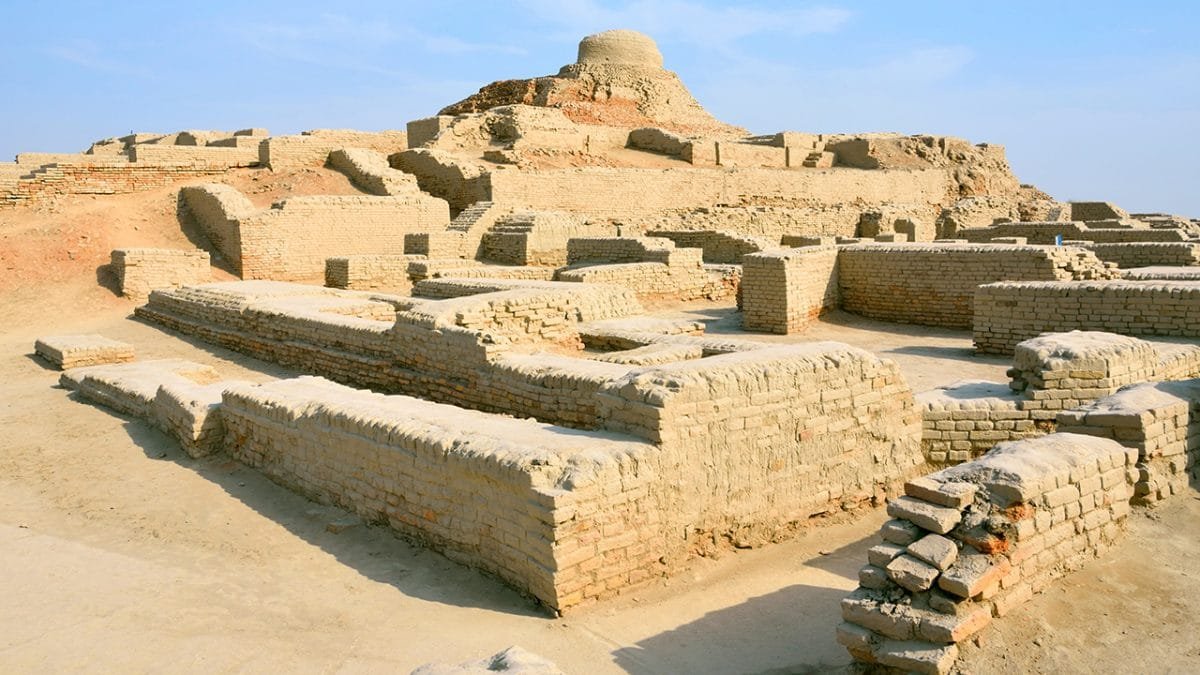
The modern story of the Indus Valley Civilization began in the 1920s when archaeologists uncovered remarkable ruins at sites now known as Mohenjo-daro and Harappa.
The discoveries astonished researchers.
Here were enormous cities built more than four thousand years ago. Streets intersected at right angles. Houses were constructed with standardized baked bricks. Many homes contained private wells and bathrooms.
Perhaps most impressive was the drainage system. Wastewater flowed through covered drains running beneath city streets. In some respects, urban sanitation in these cities exceeded that of many societies thousands of years later.
As excavations expanded, archaeologists discovered that Harappa and Mohenjo-daro were only part of a much larger civilization.
Hundreds of settlements eventually came to light across present-day Pakistan, northwestern India, and neighboring regions.
The civilization covered an immense area, making it one of the largest Bronze Age societies on Earth.
A Civilization Ahead of Its Time
The Indus Valley Civilization reached its peak between approximately 2600 and 1900 BCE.
During this period, large cities flourished across the region.
Merchants traded goods over vast distances. Craftspeople produced beads, pottery, jewelry, and tools of remarkable quality. Farmers cultivated wheat, barley, peas, and other crops.
Evidence suggests trade connections extended as far as Mesopotamia.
Weights and measures were standardized throughout the civilization, indicating a high degree of organization. Bricks used in construction followed remarkably consistent proportions.
Unlike many ancient civilizations, there is little evidence for enormous royal palaces or grand monuments celebrating kings. This has led some scholars to suggest that Indus society may have been organized differently from contemporary states.
Although many details remain unknown, one thing is clear: the civilization was highly sophisticated.
Then, over time, something changed.
The Mystery of Decline
For decades, archaeologists struggled to explain the disappearance of the Indus Valley Civilization.
Early researchers often assumed that civilizations collapse suddenly.
They looked for evidence of invasions, wars, epidemics, or natural disasters.
One influential but now largely rejected theory proposed that invading groups destroyed the cities.
However, archaeological evidence failed to support this idea convincingly.
Researchers found few signs of widespread warfare or violent destruction across major urban centers.
Instead, the evidence pointed toward a more gradual process.
Large cities were abandoned over generations rather than overnight.
Urban populations declined.
Trade networks weakened.
Settlement patterns shifted.
The civilization did not simply vanish.
Rather, it transformed.
Understanding why that transformation occurred has become one of the central challenges in South Asian archaeology.
The Importance of Rivers
To understand the fate of the Indus Valley Civilization, it is essential to understand water.
The civilization developed in a region strongly influenced by rivers and seasonal monsoon rains.
Water sustained agriculture, transportation, and daily life.
Major settlements often appeared near river systems that provided fertile land for farming.
The mighty Indus River was central to this network, but it was not the only important waterway.
Ancient texts and geological evidence suggest that other rivers once flowed through regions where settlements later flourished.
For a civilization dependent on agriculture, stable water supplies were crucial.
Any major disruption to rivers or rainfall patterns could have profound consequences.
This realization has led many researchers to focus on climate and environmental change.
Climate Change in the Ancient World
When people hear the phrase “climate change,” they often think about modern global warming.
Yet climate has changed throughout Earth’s history.
Ancient societies frequently experienced shifts in rainfall, temperature, and weather patterns.
The Indus Valley Civilization existed during a period when environmental conditions were evolving.
Over recent decades, scientists have examined lake sediments, cave formations, ocean cores, and other natural archives to reconstruct ancient climates.
These studies have revealed important clues.
Evidence suggests that the South Asian monsoon gradually weakened during the period associated with the decline of urban Indus society.
This weakening may have reduced rainfall across parts of the region.
Less rainfall would have affected agriculture, water availability, and population stability.
For a civilization supporting hundreds of thousands of people, such changes could be transformative.
The Monsoon Connection
The monsoon remains one of the most important climate systems in South Asia.
Seasonal rains nourish crops and replenish rivers.
Ancient Indus communities depended heavily on predictable monsoon patterns.
Research indicates that monsoon intensity changed significantly around the time urban centers began declining.
A weaker monsoon would not necessarily cause immediate catastrophe.
Instead, it could create long-term stress.
Harvests might become less reliable.
Water supplies could fluctuate.
Agricultural productivity could decrease.
Communities would need to adapt to increasingly challenging conditions.
Over decades and centuries, such pressures could encourage migration and alter settlement patterns.
Many archaeologists believe this gradual environmental stress played a major role in the civilization’s transformation.
The Mystery of the Saraswati River
One of the most debated topics in Indus research concerns the ancient river often associated with the Saraswati of later Indian traditions.
Numerous archaeological sites are located along dry or seasonal river channels in northwestern India and Pakistan.
This observation raised an intriguing possibility.
Did a large river once flow through these regions before disappearing?
Geologists have investigated ancient river systems using satellite imagery, sediment analysis, and other techniques.
Their findings suggest that river dynamics changed substantially over time.
Some waterways shifted course.
Others became seasonal rather than perennial.
In certain regions, reduced water flow may have made agriculture more difficult.
If major settlements depended on rivers that gradually diminished, populations would have faced increasing challenges.
Although debates continue regarding the exact nature of these river systems, changing hydrology almost certainly influenced settlement patterns.
Cities Begin to Empty
One of the most striking features of the Indus decline is the gradual abandonment of major urban centers.
Cities that once supported large populations began losing residents.
Construction activity slowed.
Trade became less extensive.
Urban infrastructure deteriorated.
Yet evidence suggests that people did not disappear.
Instead, many communities relocated.
Archaeological surveys indicate increasing numbers of smaller settlements during the later phases of the civilization.
This pattern suggests adaptation rather than extinction.
People moved toward regions where water and agricultural opportunities remained more reliable.
The shift from large cities to smaller rural communities reflects a changing social landscape.
Rather than a sudden collapse, the evidence points toward a prolonged transformation driven by environmental pressures.
Agriculture Under Stress
Agriculture formed the economic foundation of the Indus world.
When environmental conditions changed, farming systems would have felt the impact immediately.
Reduced rainfall can affect crop yields in multiple ways.
Fields receive less moisture.
Groundwater recharge declines.
River flooding patterns change.
Irrigation becomes more difficult.
Researchers studying ancient plant remains have found evidence suggesting shifts in agricultural strategies during the later stages of the civilization.
Communities appear to have diversified crops and adapted to changing conditions.
Such flexibility demonstrates resilience.
However, adaptation has limits.
If environmental stress becomes persistent enough, large urban populations may become increasingly difficult to sustain.
This may help explain why major cities gradually lost their central importance.
Trade Networks and Economic Change
The prosperity of the Indus Valley Civilization depended partly on trade.
Merchants exchanged goods across vast regions.
Raw materials moved between communities.
Craft production supported economic activity.
Environmental change can disrupt trade in subtle ways.
Declining agricultural productivity reduces surplus resources available for exchange.
Population movements alter economic relationships.
Transportation routes may become less reliable if rivers shift or water levels change.
As cities shrank, trade networks likely weakened as well.
This process may have reinforced broader patterns of decline.
Economic changes rarely occur in isolation.
They interact with environmental, social, and political factors.
The Indus transformation was probably no exception.
The Human Cost of Environmental Change
When discussing ancient civilizations, it is easy to focus on cities, monuments, and archaeological evidence.
Yet behind these changes were real people.
Farmers watching rainfall become less predictable.
Families relocating in search of better opportunities.
Communities adapting to unfamiliar conditions.
Children growing up in a world different from that of their grandparents.
The decline of urban Indus society was not merely an archaeological event.
It was a human experience.
Understanding this perspective helps explain why environmental change can have such profound effects.
Civilizations are ultimately networks of people whose lives depend on stable relationships with the natural world.
When those relationships change, societies must adapt.
Enter the Cosmic Impact Theory
While climate change has become the leading explanation for the decline of the Indus Valley Civilization, alternative theories occasionally attract attention.
Among the most dramatic is the cosmic impact hypothesis.
This idea proposes that an asteroid, comet, or other extraterrestrial object may have played a role in the civilization’s decline.
Cosmic impacts have undeniably influenced Earth’s history.
The most famous example occurred approximately 66 million years ago, when a large asteroid struck Earth and contributed to the extinction of non-avian dinosaurs.
Smaller impacts have occurred throughout human history.
Because such events can be devastating, some researchers have explored whether a cosmic disaster might explain certain ancient societal changes.
Could something similar have affected the Indus civilization?
Why Some Researchers Consider Cosmic Events
Interest in cosmic explanations often arises when researchers encounter evidence of unusual geological or archaeological phenomena.
Some proponents point to abrupt environmental changes that occurred in various regions during the late Holocene.
Others suggest that fragments of comets or meteors could have triggered regional disruptions.
In the past, a few researchers proposed links between extraterrestrial impacts and ancient cultural transformations.
These hypotheses are often controversial.
The challenge lies in finding convincing evidence.
A significant impact event would likely leave clear geological signatures.
Scientists would expect to find impact craters, shocked minerals, unusual chemical markers, or widespread layers of debris.
Such evidence is crucial for evaluating any cosmic impact claim.
The Search for Evidence
Researchers have investigated whether signs of a major impact exist near regions associated with the Indus Valley Civilization.
So far, evidence remains limited.
No widely accepted impact crater has been identified that matches the timing and scale required to explain the civilization’s transformation.
Likewise, researchers have not found strong geological signatures indicating a catastrophic extraterrestrial event across the broader Indus region during the critical period.
This absence of evidence does not absolutely rule out smaller cosmic events.
However, it makes it difficult to support the idea that an asteroid or comet caused the civilization’s decline.
Most specialists therefore view the cosmic impact hypothesis as speculative.
Why Climate Change Fits the Evidence Better
Scientific explanations are strongest when multiple lines of evidence point in the same direction.
In the case of the Indus Valley Civilization, climate-related explanations benefit from support across numerous fields.
Archaeology documents changing settlement patterns.
Geology reveals evolving river systems.
Paleoclimate studies indicate shifts in monsoon behavior.
Agricultural evidence suggests adaptation to environmental stress.
Together, these observations form a coherent picture.
No single discovery explains everything.
Yet the cumulative evidence strongly suggests that environmental change played a central role.
The climate hypothesis also aligns with the gradual nature of the civilization’s transformation.
Cities declined over centuries rather than disappearing instantly.
Such a timeline fits long-term environmental pressures more closely than a sudden catastrophic impact.
The Civilization Did Not Truly Disappear
One of the most important developments in recent research is the recognition that the Indus Valley Civilization did not simply vanish.
For many years, scholars spoke of its “collapse.”
Today, many researchers prefer terms such as “transformation” or “deurbanization.”
The distinction matters.
Urban centers declined, but populations persisted.
Cultural traditions continued.
Communities adapted to new circumstances.
Some technologies survived.
Agricultural practices evolved.
Elements of Indus culture likely influenced later societies across South Asia.
This perspective changes how we think about ancient civilizations.
Rather than viewing history as a sequence of abrupt endings, we can recognize processes of adaptation and continuity.
Lessons from the Indus Valley
The story of the Indus Valley Civilization resonates powerfully in the modern world.
Its people faced environmental challenges beyond their control.
Rainfall patterns shifted.
Rivers changed course.
Agricultural systems came under pressure.
Communities responded through adaptation, migration, and social change.
Today, billions of people confront environmental challenges of their own.
Although modern societies possess technologies unimaginable to ancient civilizations, they remain deeply dependent on climate stability, water resources, and ecological systems.
The Indus experience reminds us that environmental change can shape the course of human history.
It also demonstrates the remarkable resilience of human communities.
The Mystery of the Indus Script
Even as researchers investigate the civilization’s decline, another great mystery remains.
The Indus script has never been conclusively deciphered.
Thousands of inscriptions have been discovered on seals, pottery, and other objects.
Yet the language underlying the script remains unknown.
If the script could be deciphered, it might provide extraordinary insights into politics, religion, trade, and social organization.
It could even reveal how ancient people understood the environmental challenges around them.
For now, however, the silence of the script preserves many secrets.
The civilization continues to speak through its cities, artifacts, and landscapes rather than through written records.
New Technologies and Future Discoveries
Modern science is transforming the study of ancient civilizations.
Satellite imagery reveals buried settlements.
Geochemical analysis reconstructs ancient environments.
Remote sensing identifies long-forgotten river channels.
DNA studies illuminate population histories.
Advanced dating techniques improve chronological precision.
Each new tool brings fresh perspectives to old questions.
Future discoveries may refine current theories or reveal entirely new dimensions of the Indus story.
Archaeology is a continually evolving field.
The mystery is not solved once and for all.
Instead, understanding grows gradually as new evidence emerges.
Conclusion
The disappearance of the Indus Valley Civilization remains one of history’s most fascinating mysteries. Yet modern research increasingly suggests that the question is not why the civilization suddenly vanished, but how it gradually transformed.
The evidence points strongly toward environmental change as a major driving force. Shifting monsoon patterns, changing river systems, and increasing agricultural challenges likely placed growing pressure on urban life. Over generations, populations adapted by relocating, altering economic strategies, and reorganizing their communities.
The cosmic impact hypothesis captures the imagination and reminds us that Earth exists within a dynamic cosmic environment. However, current scientific evidence provides little support for the idea that an asteroid or comet caused the decline of the Indus civilization. Compared with the environmental explanation, the cosmic scenario remains speculative.
Perhaps the most remarkable lesson is that the civilization did not truly disappear. Its cities may have emptied, but its people endured. They adapted to changing circumstances and carried elements of their culture into the future.
The story of the Indus Valley Civilization is therefore not simply a tale of collapse. It is a story of resilience, adaptation, and humanity’s enduring relationship with the natural world. It reminds us that even the most advanced societies depend on environmental stability—and that when nature changes, civilizations must change with it.
Thousands of years later, the ancient streets of Harappa and Mohenjo-daro still stand as silent witnesses to that transformation, inviting us to explore one of the greatest mysteries of the ancient world and to reflect on the challenges that continue to shape human societies today.