Long before libraries, before printing presses, before history was written in ink, humanity carried its greatest truths in the fragile vessel of memory. Around firelit camps and beneath star-filled skies, people told stories. These stories were not entertainment in the modern sense. They were survival tools. They explained storms and death, hunger and love, the strange cruelty of fate, and the terrifying vastness of the heavens. They gave shape to a world that seemed unpredictable and alive with hidden forces.
Myths were the first maps of human existence.
They were born in fear, wonder, and longing. They were created by minds trying to understand why the sun rises, why the dead do not return, why children are born, why drought comes, why war destroys, and why beauty exists at all. When there was no microscope to reveal germs and no telescope to reveal galaxies, myth became the bridge between ignorance and meaning. It was humanity’s earliest attempt at philosophy, psychology, history, and science woven into one.
Even today, in an age of satellites and supercomputers, ancient myths still whisper through our language, art, and beliefs. They shape religions, inspire literature, and echo in the way we imagine heroes and villains. They reveal something eternal: humans are storytelling beings. We do not merely live in the world—we interpret it, dramatize it, and turn it into narrative.
The oldest myths are not just relics of the past. They are the foundation stones of civilization. They are the voices of our ancestors, speaking across thousands of years, telling us what they feared, what they cherished, and what they hoped the universe might be.
To explore the world’s oldest myths is to step into the earliest human imagination, to witness the first great stories that shaped humanity’s sense of reality.
What Makes a Myth a Myth?
The word “myth” is often misunderstood. In everyday speech, people use “myth” to mean something false. But in the academic and cultural sense, a myth is not simply a lie. A myth is a sacred narrative—a story that expresses how a culture understands the world and its place in it.
A myth is a story that answers big questions. It explains origins: the creation of the universe, the birth of the gods, the beginnings of humanity, the first death, the first fire, the first kingship. Myths also explain natural events: floods, earthquakes, thunder, seasons, and the movement of celestial bodies. They explain moral order: why good and evil exist, why humans suffer, why rules matter, and why certain behaviors are sacred or forbidden.
Myths often feature gods, supernatural beings, legendary ancestors, cosmic monsters, and miraculous transformations. They exist outside ordinary time. They speak of “the first days,” “the beginning,” “the age of heroes,” or “when the world was young.”
Yet myths are not random fantasies. They are deeply structured. They reflect the values and fears of the society that created them. They preserve historical memory in symbolic form. They carry psychological truths about human nature. They are often connected to rituals, festivals, and religious practices.
A myth is a story a culture lives by.
Even when myths contradict each other, they remain meaningful. Ancient people did not always demand logical consistency. They understood that reality could be layered and mysterious. Myth was not meant to be dissected like a scientific paper. It was meant to be felt, remembered, and retold.
To study ancient myths is not to ask whether they are “true” in a literal sense, but to ask what kind of truth they were designed to carry.
The Dawn of Mythmaking: Why Ancient Humans Created Stories
To understand the oldest myths, we must first understand why myths exist at all.
Early humans lived in a world where nature was both generous and deadly. Rain could mean crops, but floods could mean destruction. Fire could mean warmth, but it could also burn down a shelter. Predators hunted in the dark. Disease struck without warning. Death was constant.
In such a world, survival required more than physical strength. It required meaning. Humans needed to believe that the world was not pure chaos. They needed explanations, even if those explanations were symbolic.
Myths gave early societies a sense of control. If thunder was the anger of a god, perhaps rituals could calm it. If drought was punishment, perhaps moral behavior could restore rain. If death was caused by a mythic mistake, perhaps the living could avoid repeating it.
Myths also strengthened community. Shared stories created shared identity. They told people who they were, where they came from, and what they were supposed to do. A tribe that believed it descended from a sacred ancestor had a bond stronger than blood.
Myths provided moral instruction. They warned against pride, greed, betrayal, and disrespect. They praised courage, loyalty, generosity, and wisdom. The gods in myths were often harsh, but their punishments reinforced social order.
Myths also provided emotional comfort. They offered explanations for suffering. They suggested that the dead were not gone forever, that they lived in another realm. They promised that the universe had structure and purpose.
Most importantly, myths allowed humans to confront the unknown. The human mind cannot tolerate emptiness. When faced with silence, we create stories. The earliest myths were humanity’s answer to the cosmic silence.
The Oldest Written Myths: The Birth of Literature in Mesopotamia
The earliest known written myths come from Mesopotamia, the ancient region between the Tigris and Euphrates rivers, in what is now Iraq and parts of Syria and Turkey. Mesopotamia is often called the “cradle of civilization” because it produced some of the earliest cities, writing systems, and legal codes.
Writing emerged in Mesopotamia around the late 4th millennium BCE, primarily for record-keeping. But eventually, people began to write stories.
When myths became written, something extraordinary happened. Stories that once depended on fragile oral memory gained a new kind of immortality. Clay tablets preserved voices across millennia.
Among the most famous Mesopotamian myths is the Epic of Gilgamesh, often considered the oldest great work of literature.
Gilgamesh: The Hero Who Could Not Escape Death
The Epic of Gilgamesh tells the story of a powerful king of Uruk, a city-state in ancient Sumer. Gilgamesh is described as part divine, part human, a man of immense strength and ambition. But he is also arrogant and oppressive.
The gods respond to the suffering of the people by creating Enkidu, a wild man raised among animals. Enkidu is meant to challenge Gilgamesh. When they meet, they fight fiercely, but their battle ends in friendship. Together they become legendary heroes, slaying monstrous beings and seeking glory.
But the epic takes a darker turn when Enkidu dies as punishment from the gods. Gilgamesh is shattered. For the first time, he confronts his own mortality. The greatest king in the world realizes that strength cannot defeat death.
Gilgamesh sets out on a desperate quest to find immortality. He journeys across deserts and seas, meets strange beings, and finally finds Utnapishtim, a man who survived a great flood and was granted eternal life.
Utnapishtim tells Gilgamesh the story of the flood, a tale that echoes through many later cultures. The gods decided to destroy humanity with water, but one god warned Utnapishtim, who built a great boat and saved animals and his family. After the flood, the gods regretted their destruction.
Gilgamesh ultimately fails to achieve immortality. Even when he finds a plant that can restore youth, it is stolen by a serpent.
In the end, Gilgamesh returns to Uruk and sees the city walls he built. He realizes that his true immortality lies not in living forever, but in the legacy of what he created.
This myth shaped humanity because it expressed a universal human truth: death is inevitable, and meaning must be found despite that inevitability. Gilgamesh is not just a king of ancient Uruk. He is every human being who has ever stood at the edge of loss and asked, “Why must we die?”
The Epic of Gilgamesh is one of the earliest myths to explore existential fear with raw emotional power. It shows that thousands of years ago, people were already wrestling with the same questions that haunt modern minds.
The Mesopotamian Creation Myth: The Battle That Made the World
Another ancient Mesopotamian myth is the Enuma Elish, a Babylonian creation story. It describes a universe that begins in chaos, with primordial waters represented by gods.
The myth tells of conflict between generations of gods. Eventually, a young god named Marduk rises to power and defeats the chaos monster Tiamat, who represents the primeval sea. Marduk splits her body and uses it to create the heavens and the earth.
Humanity is created later, often portrayed as being made from the blood of a defeated god, meant to serve the gods by doing labor.
This myth is deeply political. It reflects the rise of Babylon and its chief god Marduk. It shows how myths were used not only to explain the cosmos but also to justify social structures. If humans were created to serve gods, then kings and priests could claim divine authority.
But beyond politics, the Enuma Elish shaped human thought by introducing a powerful theme: creation through conflict. The world is not peacefully formed; it is born from struggle, violence, and sacrifice.
This theme appears again and again across cultures. Many creation myths describe chaos being defeated or transformed into order. It reflects an ancient human intuition: the world feels like something wrestled into shape.
Egypt’s Ancient Myths: Order, Death, and the Eternal Cycle
While Mesopotamian myths often emphasize conflict and cosmic struggle, Egyptian mythology is marked by a different tone: stability, continuity, and the sacred rhythm of life and death.
Ancient Egypt flourished along the Nile River, whose predictable flooding allowed agriculture to thrive. This natural cycle shaped Egyptian thought. The Egyptians believed in cosmic order, called Ma’at, which represented balance, truth, and harmony.
Egyptian myths often revolve around the preservation of Ma’at against chaos.
Osiris, Isis, and Horus: The Myth That Defined Kingship
One of the most influential Egyptian myths is the story of Osiris, Isis, Set, and Horus.
Osiris is a divine king who brings civilization to Egypt. He teaches agriculture and laws, bringing order to humanity. But his brother Set, associated with chaos and violence, grows jealous. Set murders Osiris, sometimes depicted as cutting his body into pieces and scattering them.
Osiris’s wife Isis, a goddess of magic and devotion, searches for her husband’s body. She gathers the pieces and uses her power to resurrect him long enough to conceive their son, Horus.
Osiris does not return fully to the living world. Instead, he becomes ruler of the underworld, the judge of the dead.
Horus grows up and challenges Set, engaging in a long struggle for the throne. Eventually Horus triumphs, restoring rightful order.
This myth is not merely a story. It is the foundation of Egyptian kingship. Pharaohs were seen as living embodiments of Horus, maintaining Ma’at. Death was not seen as an end, but as a transformation, just as Osiris became ruler of the afterlife.
The myth shaped humanity by providing one of the earliest powerful narratives about resurrection, justice after death, and the eternal struggle between order and chaos.
It also contains one of the most emotionally resonant images in world mythology: Isis, the devoted spouse, refusing to accept loss, gathering the broken pieces of love and restoring life from death. That image is ancient, but it still speaks to the human heart.
The Egyptian Creation Myths: The Cosmic Egg and the First Sunrise
Egypt did not have a single unified creation myth. Different cities had different theological traditions.
In some versions, the universe begins as a watery chaos called Nun. From Nun emerges a primeval mound, like land rising from floodwaters. A creator god, such as Atum or Ra, appears on this mound and generates other gods.
Other traditions speak of a cosmic egg or a lotus flower opening, releasing the sun god.
These myths reflect Egypt’s landscape. The Nile floods each year, and land emerges again. The sunrise is a daily rebirth. Creation is not a one-time event but a continuous process.
Egyptian mythology shaped humanity by emphasizing cyclical time: the idea that life, death, and rebirth are part of a cosmic rhythm.
The Myths of Ancient India: Cosmic Time and Divine Mystery
The mythological traditions of ancient India are among the richest and most complex in the world. They are preserved in texts such as the Vedas, the Upanishads, the Mahabharata, the Ramayana, and the Puranas.
Some of these traditions date back to the second millennium BCE or earlier in oral form, though their written forms developed over centuries.
Indian myths are marked by vast cosmic scale. Time is not linear but cyclical. Universes are created and destroyed in endless rhythms. Gods are not simply powerful beings but expressions of cosmic principles.
The Rigveda and the Hymn of Creation
One of the most famous early Indian creation passages comes from the Rigveda, an ancient collection of hymns.
Unlike many myths that claim certainty, this hymn is strikingly philosophical. It describes a time before existence and nonexistence, before air and sky. It speaks of darkness hidden by darkness, and then of something stirring.
But the hymn ends with uncertainty. It suggests that even the gods may not know how creation happened.
This is extraordinary. It shows that ancient Indian thinkers were not merely telling comforting stories; they were confronting mystery with humility. The Rigveda acknowledges that the origin of the universe might be beyond complete understanding.
This shaped humanity by introducing a profound intellectual honesty into myth: the idea that ultimate reality may be unknowable.
Vishnu, Shiva, and the Cosmic Dance of Creation and Destruction
Later Hindu mythology introduces powerful divine figures such as Vishnu, the preserver, and Shiva, the destroyer.
Vishnu is often depicted as lying on a cosmic ocean, with a lotus emerging from his navel. From the lotus arises Brahma, the creator, who shapes the universe.
Shiva, meanwhile, represents destruction not as evil but as necessary transformation. Shiva’s cosmic dance symbolizes the rhythm of creation, destruction, and renewal.
These myths shaped humanity by presenting destruction as part of sacred order. In many cultures, destruction is seen as tragedy. In Hindu thought, destruction is also cleansing. It makes space for rebirth.
This perspective has deeply influenced Indian philosophy and spirituality and continues to shape millions of lives.
The Mahabharata and the Bhagavad Gita: Myth as Moral Battlefield
The Mahabharata is one of the world’s longest epic narratives, containing stories of kings, gods, heroes, and cosmic events. At its heart is a war between two branches of a royal family, the Pandavas and the Kauravas.
Within the Mahabharata is the Bhagavad Gita, a dialogue between the warrior Arjuna and the god Krishna, who serves as his charioteer.
Arjuna is overwhelmed by despair at the thought of killing relatives and teachers in war. Krishna teaches him about duty, the nature of the soul, and the cosmic order.
This myth shaped humanity by exploring moral conflict in a deeply psychological way. It confronts one of the hardest human questions: what do you do when your duty demands pain?
Unlike simplistic myths where heroes are always confident, the Mahabharata presents heroes who doubt, grieve, and struggle. It shows that righteousness is not always clear and that life can demand impossible choices.
The Myths of Ancient China: Creation, Chaos, and Harmony
Chinese mythology is ancient and layered, shaped by centuries of storytelling, philosophical traditions, and regional beliefs.
One of the most famous Chinese creation myths is the story of Pangu.
Pangu: The Giant Who Split Heaven and Earth
According to this myth, the universe began as a cosmic egg containing chaos. Inside the egg, Pangu grew for thousands of years. When he awoke, he split the egg with a great axe, separating heaven and earth.
Pangu stood between them, holding them apart as they grew farther away. After he died, his body transformed into parts of the world: his breath became wind, his voice thunder, his eyes the sun and moon, his blood rivers, his bones mountains.
This myth shaped humanity by presenting creation as an act of sacrifice. The world is literally made from a living being. The earth is not separate from life; it is born from it.
This theme appears in other cultures as well, but in China it resonates strongly with ideas of harmony between humans and nature.
Nuwa: The Goddess Who Created Humanity
Another important Chinese myth is the story of Nuwa, a goddess who created humans from clay.
In some versions, Nuwa molds humans carefully one by one, creating the wealthy and noble. Later, she becomes tired and uses a rope dipped in mud to create ordinary people quickly.
Nuwa is also known for repairing the sky after a catastrophe, using stones to patch a broken heaven.
This myth shaped humanity by portraying creation as craftsmanship. Humans are made with intention, not accident. It also reflects social hierarchy, suggesting that myths often encoded social structures.
Nuwa’s act of repairing the sky also represents a powerful theme: the world is fragile, and divine forces must sometimes restore balance.
The Myths of Ancient Greece: Gods, Heroes, and the Birth of Western Imagination
Greek mythology is among the most influential myth systems in world history, not because it is the oldest, but because it profoundly shaped Western art, philosophy, and literature.
Greek myths were developed over centuries and preserved in works such as those attributed to Homer and Hesiod, as well as in countless plays and poems.
Greek myths are filled with dramatic personalities. The gods are powerful but flawed, driven by jealousy, desire, pride, and rage. Heroes are brave but doomed, caught between human limits and divine manipulation.
Greek mythology shaped humanity by turning myth into psychological drama.
Chaos and the Titans: The Greek Creation Story
In Hesiod’s Theogony, the universe begins with Chaos, a vast emptiness. From Chaos emerge primordial beings such as Gaia (Earth), Tartarus (the abyss), and Eros (desire).
Gaia gives birth to Uranus (Sky), and together they produce the Titans. Conflict erupts between generations. Uranus is overthrown by his son Cronus. Cronus later devours his own children to prevent being overthrown.
But one child, Zeus, survives. Zeus grows up, defeats Cronus, and becomes ruler of the gods.
This myth reflects a recurring theme: generational struggle. Power is unstable. Sons overthrow fathers. The cosmos is shaped by rebellion.
Greek mythology shaped humanity by presenting the universe as a family drama of power, betrayal, and ambition.
Prometheus: The Myth of Fire and Defiance
Prometheus is a Titan who defies Zeus by stealing fire and giving it to humanity. Fire represents not only warmth but technology, civilization, and knowledge.
Zeus punishes Prometheus by chaining him to a rock, where an eagle eats his liver daily, only for it to regenerate.
This myth shaped humanity by expressing a powerful idea: progress is dangerous. Knowledge comes with suffering. Civilization is built on defiance against divine authority.
Prometheus became a symbol of human ambition and rebellion. His story echoes in later cultural narratives about science, invention, and the cost of pushing boundaries.
Pandora: Curiosity and the Birth of Suffering
Another famous Greek myth is the story of Pandora, the first woman created by the gods. She is given a jar or box containing all the evils of the world. When she opens it, suffering escapes into humanity.
Only hope remains inside.
This myth shaped humanity by exploring curiosity and consequence. It reflects ancient anxieties about why pain exists in the world and why humans cannot return to innocence.
The story has influenced Western thought for centuries, often used to explain the origins of suffering and the complexity of human desire.
The Odyssey and the Iliad: Myth as Epic Memory
Homer’s epics, the Iliad and the Odyssey, shaped humanity by defining the heroic narrative.
The Iliad tells of the Trojan War, focusing on Achilles and the tragic cost of pride and rage. The Odyssey tells of Odysseus’s long journey home, filled with monsters, temptations, and divine interference.
These stories are not only about war and adventure. They are about identity, loyalty, endurance, and the longing for home.
They shaped Western storytelling traditions, influencing everything from medieval epics to modern novels and films.
The Greek myths remind us that ancient stories are not primitive. They are sophisticated explorations of human emotion.
The Myths of Rome: Borrowed Gods and National Destiny
Roman mythology was heavily influenced by Greek mythology, but it developed its own character. Roman myths were often tied to political identity and national purpose.
The Romans saw themselves as heirs of destiny. Their myths justified empire.
Aeneas: The Refugee Who Became Rome’s Ancestor
One of the most important Roman myths is the story of Aeneas, a Trojan hero who escapes the destruction of Troy and journeys to Italy, where his descendants eventually found Rome.
Aeneas is portrayed as dutiful, loyal, and destined to build a future civilization.
This myth shaped humanity by linking identity to migration and struggle. It framed Rome not as a случай creation, but as the fulfillment of fate.
The story also reflects a timeless theme: refugees carrying the ashes of their destroyed world, searching for a new home.
Even today, Aeneas’s story resonates with human history, which has always been shaped by displacement and rebuilding.
The Norse Myths: Cold Worlds, Fierce Gods, and the End of Time
In the far north of Europe, Norse mythology developed in a harsh environment of long winters, icy seas, and unpredictable survival. It is filled with stark beauty and grim realism.
Norse myths are preserved mainly in medieval Icelandic texts, but the stories are much older in oral tradition.
Unlike many mythologies that promise eternal cosmic stability, Norse mythology accepts that the world will end.
Yggdrasil and the Nine Worlds
Norse cosmology describes the universe as centered around Yggdrasil, the world tree. Its branches and roots connect nine worlds, including Asgard (home of the gods), Midgard (the human world), and Hel (the realm of the dead).
This myth shaped humanity by imagining the universe as interconnected. Everything is part of one living structure, held together by a tree.
It is a powerful metaphor for ecological and spiritual connection.
Odin: The God Who Sacrificed Himself for Wisdom
Odin, the chief god, is not a comfortable father figure. He is a seeker, obsessed with knowledge. He sacrifices an eye to gain wisdom and hangs himself from Yggdrasil to gain the runes.
This myth shaped humanity by portraying wisdom as painful. Knowledge is not freely given; it is earned through sacrifice.
Odin is not a god of easy comfort. He is a god of relentless searching, a symbol of the human hunger to understand.
Ragnarok: The Doom That Cannot Be Avoided
Ragnarok is the Norse apocalypse. It is the final battle in which gods and monsters destroy each other. Odin is killed by the wolf Fenrir. Thor kills the serpent Jormungandr but dies from its venom. The world burns and sinks into the sea.
But after the destruction, a new world emerges. Survivors rebuild. Life begins again.
This myth shaped humanity by introducing a tragic but courageous worldview. Fate cannot be escaped, but one can face it with honor.
Norse mythology teaches a haunting lesson: meaning is not found in winning forever, but in fighting even when defeat is certain.
That is a deeply human philosophy.
The Celtic Myths: Otherworlds, Magic, and Sacred Landscapes
Celtic mythology developed across regions such as Ireland, Scotland, Wales, and parts of continental Europe. Much of it was preserved in medieval manuscripts, but the traditions are far older.
Celtic myths are rich with enchanted landscapes, shapeshifting beings, and mysterious otherworlds.
Unlike some mythologies focused on cosmic order, Celtic mythology often feels like a dreamscape where boundaries between worlds are thin.
The Otherworld is a recurring theme—a realm of immortality, beauty, and danger. Heroes sometimes journey there, encountering magical beings and gaining wisdom or tragedy.
Celtic myths shaped humanity by emphasizing the sacredness of nature. Rivers, hills, forests, and islands are not just locations; they are alive with spiritual presence.
This worldview has influenced later European folklore, fairy tales, and fantasy literature.
The Myths of Ancient Africa: Origins, Ancestors, and Sacred Animals
Africa contains thousands of cultures, each with its own mythological traditions. Many African myths were preserved orally rather than in written form, making them harder to date precisely. But their roots are ancient.
African myths often emphasize the relationship between humans, ancestors, spirits, and the natural world. Animals are frequently central characters, reflecting the deep connection between early human societies and wildlife.
Many African myths explain why death exists, why humans must work, why certain animals behave as they do, and how the world was shaped by divine beings.
One recurring theme is the idea that humans were once closer to the divine, but a mistake or act of disobedience created separation.
These myths shaped humanity by preserving cultural identity and moral teachings across generations, even in societies without written records.
They also influenced global storytelling traditions through the spread of folklore and oral narrative techniques.
The Myths of Indigenous Australia: The Dreaming and Sacred Time
The mythological traditions of Indigenous Australian peoples are among the oldest continuous cultural traditions on Earth. Many Aboriginal Australian communities maintain stories that have been passed down orally for countless generations.
A central concept in many of these traditions is the Dreaming (or Dreamtime), a sacred era when ancestral beings shaped the land, created life, and established laws.
In these stories, the landscape itself is alive with meaning. Rocks, rivers, mountains, and deserts are shaped by the journeys and actions of ancestral beings.
The Dreaming is not simply “the past.” It is a timeless spiritual reality that continues to exist. The stories are linked to rituals, art, songlines, and sacred sites.
These myths shaped humanity by offering one of the most profound examples of myth as living geography. The land is not just physical space—it is a sacred narrative.
In the Dreaming worldview, humans are caretakers of a story written into the earth itself.
The Myths of the Americas: Creation, Corn, and the Sacred Sky
Across North, Central, and South America, Indigenous cultures developed rich mythologies that explained the cosmos and human life.
One of the most famous ancient myth texts from the Americas is the Popol Vuh, the sacred narrative of the Maya, preserved in written form after European contact but rooted in far older oral tradition.
The Popol Vuh: The Maya Creation and the Birth of Humanity
The Popol Vuh describes gods attempting to create humans. Their first creations fail. They try beings made of mud, but they crumble. They try beings made of wood, but they lack souls and understanding.
Finally, they create humans from maize (corn), a sacred crop central to Mesoamerican life.
This myth shaped humanity by connecting human identity to agriculture. Humans are not made of dust or clay, but of food—the crop that sustains civilization.
It also reflects a deep idea: to be human is not only to have a body, but to have consciousness, gratitude, and reverence.
The Popol Vuh also includes hero twins who battle underworld forces, a theme that echoes in many mythologies: young heroes confronting death itself.
Aztec Myths: The Sun That Must Be Fed
Aztec mythology includes the dramatic story of the Five Suns. According to this tradition, the world has been created and destroyed multiple times. Each era ends in catastrophe.
The current world is the fifth sun, and it requires nourishment to survive. This belief was connected to ritual practices meant to sustain cosmic order.
Aztec myths shaped humanity by emphasizing cosmic fragility. The sun is not guaranteed. The world must be maintained through sacred duty.
This worldview reflects both awe and fear: the recognition that life depends on forces beyond human control.
North American Indigenous Myths: Tricksters and Transformation
Many Indigenous North American cultures have myths featuring trickster figures such as Coyote, Raven, or Spider. These beings are clever, mischievous, and sometimes foolish. They shape the world through their actions, often accidentally.
Trickster myths are deeply human. They acknowledge that creation is not always neat. The world is shaped by mistakes, humor, and unpredictability.
These myths shaped humanity by introducing a flexible moral framework. The trickster is not purely evil or good. Instead, the trickster represents chaos, creativity, and transformation.
This is a reminder that ancient storytelling was not always about strict morality. Sometimes it was about complexity and survival.
The Universal Themes of Ancient Myths
Across continents and thousands of years, ancient myths differ in detail, but they share striking patterns. This is not because cultures copied each other in every case, but because humans share common experiences.
We all see the sun rise. We all fear death. We all experience love and betrayal. We all face storms, hunger, and the unknown.
The oldest myths reveal universal themes that shaped humanity’s collective imagination.
Creation from Chaos: The Human Need for Order
Many mythologies begin with chaos: a formless void, a dark ocean, an empty space. Then something happens—a god speaks, a giant awakens, a cosmic egg breaks, a battle occurs—and order emerges.
This reflects a deep psychological need. Humans crave structure. We want to believe that the universe is not meaningless. Creation myths are the first human attempt to impose narrative order on existence.
They shaped humanity by teaching that the world has a beginning, a structure, and a reason.
Flood Myths: Memory of Catastrophe
Flood myths appear in many cultures, from Mesopotamia to India to the Americas. Often they involve gods sending a flood to punish humanity, with one survivor saving life through a boat or shelter.
These myths may reflect real ancient flood events preserved in cultural memory. But they also carry symbolic meaning: water as destruction and renewal.
Flood myths shaped humanity by expressing the fear of nature’s power and the hope that life can begin again after disaster.
The Hero’s Journey: Courage Against the Impossible
Hero myths appear everywhere. Gilgamesh seeks immortality. Odysseus struggles to return home. The Maya hero twins face the underworld. Norse gods battle monsters. Indian epics tell of warriors and divine missions.
The hero’s journey is one of humanity’s oldest story patterns because it reflects life itself. We are all thrown into challenges. We all face suffering. We all seek meaning.
Hero myths shaped humanity by offering models of courage, resilience, and identity. They taught people what it meant to be strong, honorable, or wise.
Death and the Afterlife: The Oldest Human Fear
Nearly every mythology tries to explain death. Some describe underworlds, heavens, reincarnation, ancestral realms, or eternal darkness.
These stories were not mere fantasies. They were emotional survival strategies. They helped humans face grief and loss.
Myths shaped humanity by giving death a narrative. They transformed the terrifying unknown into a story with structure.
Even if the afterlife described was frightening, it was at least a map.
The Trickster: Chaos as Creativity
Trickster figures appear in many cultures. They break rules, steal fire, deceive gods, and create change through mischief.
The trickster represents an important truth: life is unpredictable. Not everything is controlled by noble heroes or wise gods. Sometimes the world is shaped by accidents and foolishness.
Trickster myths shaped humanity by teaching adaptability. They reminded people that intelligence includes humor, improvisation, and survival instinct.
The Sacred Feminine and Masculine: Cosmic Balance
Many myths involve divine pairs: sky father and earth mother, sun god and moon goddess, creator and destroyer, king and queen of the underworld.
These relationships reflect ancient understanding of balance. Life is born from union, tension, and complementarity.
Myths shaped humanity by encoding gender roles, fertility beliefs, and cosmic symbolism. Sometimes these myths empowered female divinities, as with Isis or Nuwa. Sometimes they reinforced patriarchal structures.
But across cultures, myths recognized that creation requires relationship.
How Myths Shaped Religion and Civilization
The world’s oldest myths did not remain stories. They became the foundation of religions and civilizations.
Temples were built based on myths. Rituals reenacted mythic events. Kings claimed descent from gods. Laws were justified through divine narratives.
Myths shaped calendars and festivals. Agricultural cycles were linked to mythic death-and-rebirth gods. Seasonal changes became sacred dramas.
Myths shaped moral systems. Stories about divine punishment reinforced social rules. Stories about heroic sacrifice encouraged loyalty.
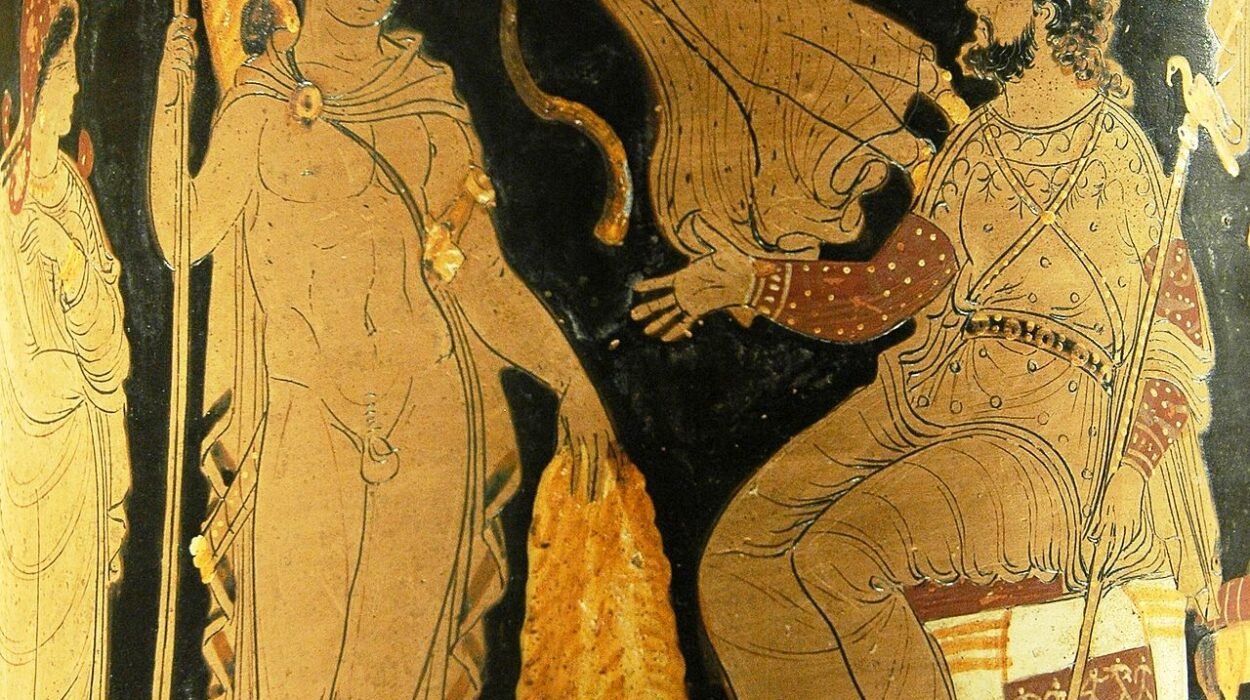
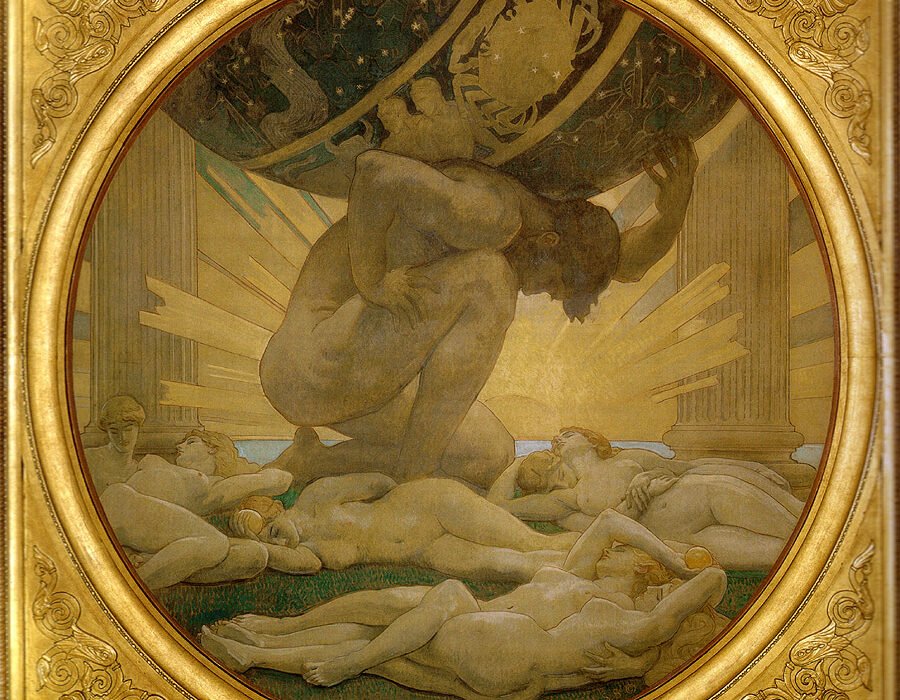
Myths shaped art. Ancient sculptures, murals, pottery, and carvings often depict mythic scenes. These images served as both decoration and religious communication.
Myths shaped political power. Rulers used myths to justify authority, claiming divine favor or cosmic destiny.
In many ways, myth was the operating system of early civilization. It organized society’s beliefs, fears, and hopes.
Without myths, early civilizations would have lacked a shared symbolic language to hold them together.
Myth and Memory: How Oral Tradition Preserved Ancient Worlds
The oldest myths were not written at first. They were carried by storytellers, priests, and elders. Oral tradition required repetition, rhythm, and memorable structure.
Many myths were preserved through poetic forms, songs, and rituals. This helped communities remember complex narratives across generations.
Oral tradition is not static. Myths changed over time. Storytellers adapted them to new circumstances, adding details, shifting emphasis, or merging traditions.
This is why myths often have multiple versions. A myth was not a single fixed text. It was a living entity.
This living nature is part of what made myths powerful. They evolved with society. They absorbed historical events and transformed them into symbolic narrative.
Oral tradition shaped humanity by ensuring that knowledge could survive without writing. It was an ancient form of cultural immortality.
Myth as Early Science: Explaining Nature Before Physics
Before scientific explanations, myth provided natural explanations.
Thunder might be a god’s hammer. Earthquakes might be a giant moving beneath the earth. The sun might be a divine chariot crossing the sky.
These explanations were not foolish. They were imaginative attempts to connect human experience to cosmic forces.
Myth shaped humanity by creating the first models of the universe. Even if these models were not scientifically accurate, they established the idea that nature has causes and patterns.
In this sense, myth was a precursor to science. It was the first attempt to answer “why.”
Science later replaced mythic explanations with empirical evidence, but the mythic impulse—the desire to understand—is the same.
Myth as Psychology: The Ancient Mirror of the Human Mind
Modern psychology has often recognized that myths express deep human emotions and subconscious patterns.
Myths contain archetypes: the hero, the mother, the wise elder, the trickster, the monster, the sacrificial victim.
These figures appear repeatedly because they reflect recurring human experiences.
The monster often symbolizes fear. The underworld symbolizes death and the unknown. The hero symbolizes the self striving for meaning. The divine parent symbolizes authority and protection.
Myths shaped humanity by giving people symbolic tools to process emotional reality. They externalized inner struggles into cosmic narratives.
When Gilgamesh mourns Enkidu, it is not just a king’s grief. It is humanity’s grief. When Odin sacrifices for wisdom, it is humanity’s hunger to understand. When Isis gathers Osiris’s body, it is humanity’s refusal to accept loss.
Myths are psychological maps disguised as supernatural tales.
Why Ancient Myths Still Matter Today
In the modern world, myths might seem irrelevant. We have science, technology, and detailed historical records. We can explain lightning with electricity and disease with microbes.
And yet myths still matter, perhaps more than we realize.
Myths survive because they speak to emotional truths that science does not address. Science can explain how the universe works, but it does not tell us how to live, how to endure grief, how to face death, or how to find meaning.
Myths continue to influence modern religion. Many religious traditions preserve ancient mythic structures: creation stories, flood narratives, divine sacrifices, heroes and prophets.
Myths influence modern storytelling. Films, novels, and games often follow mythic patterns. The hero’s journey is everywhere. Superhero stories are modern myths. Fantasy worlds are built from ancient archetypes.
Myths influence national identity. Many nations still rely on founding myths, legendary ancestors, and symbolic narratives about origin and destiny.
Myths influence language. Words and phrases from myths remain in everyday speech, from “Achilles’ heel” to “Pandora’s box.”
Most importantly, myths remind us of continuity. They show that humans have always been human. Thousands of years ago, people feared death, loved their families, dreamed of immortality, and searched for meaning.
Ancient myths are messages from the past saying: you are not alone in your questions.
The Oldest Myths as Humanity’s Shared Inheritance
When we speak of the world’s oldest myths, we are speaking of humanity’s earliest cultural inheritance. These stories were not written by one author. They were shaped by generations.
They are the collective voice of ancient communities who stood beneath the stars and tried to understand what they were seeing.
Some myths are filled with gods and monsters. Others are philosophical and quiet. Some justify kingship. Others question existence itself.
But all of them are attempts to do something profoundly human: to turn life into meaning.
The oldest myths shaped humanity because they taught people how to interpret the world. They created moral frameworks, cultural identity, and spiritual hope. They gave structure to chaos and narrative to suffering.
They were not merely stories. They were the first great human inventions of imagination.
Even now, in the modern age, myths remain alive. They live in religion, art, and dreams. They live in the stories we tell our children, in the heroes we admire, in the monsters we fear, in the way we imagine the beginning and the end.
The world’s oldest myths are not dead words on ancient clay tablets. They are living echoes.
They remind us that civilization did not begin with machines or cities. It began with a human voice telling a story in the dark, refusing to let the universe be meaningless.
And perhaps that is the greatest myth of all: the belief that our lives matter, that our struggles have purpose, and that the world—however vast and indifferent it may seem—can be understood through story.