Few archaeological discoveries have captured the world’s imagination like the opening of the tomb of the ancient Egyptian pharaoh Tutankhamun. Hidden beneath the sands of Egypt for more than 3,000 years, the tomb remained remarkably untouched by grave robbers, preserving an astonishing collection of treasures that dazzled the world. Golden shrines, jeweled ornaments, ceremonial chariots, beautifully crafted furniture, and the famous golden funerary mask seemed to transport people back to the age of the pharaohs.
But the treasures were only part of the story.
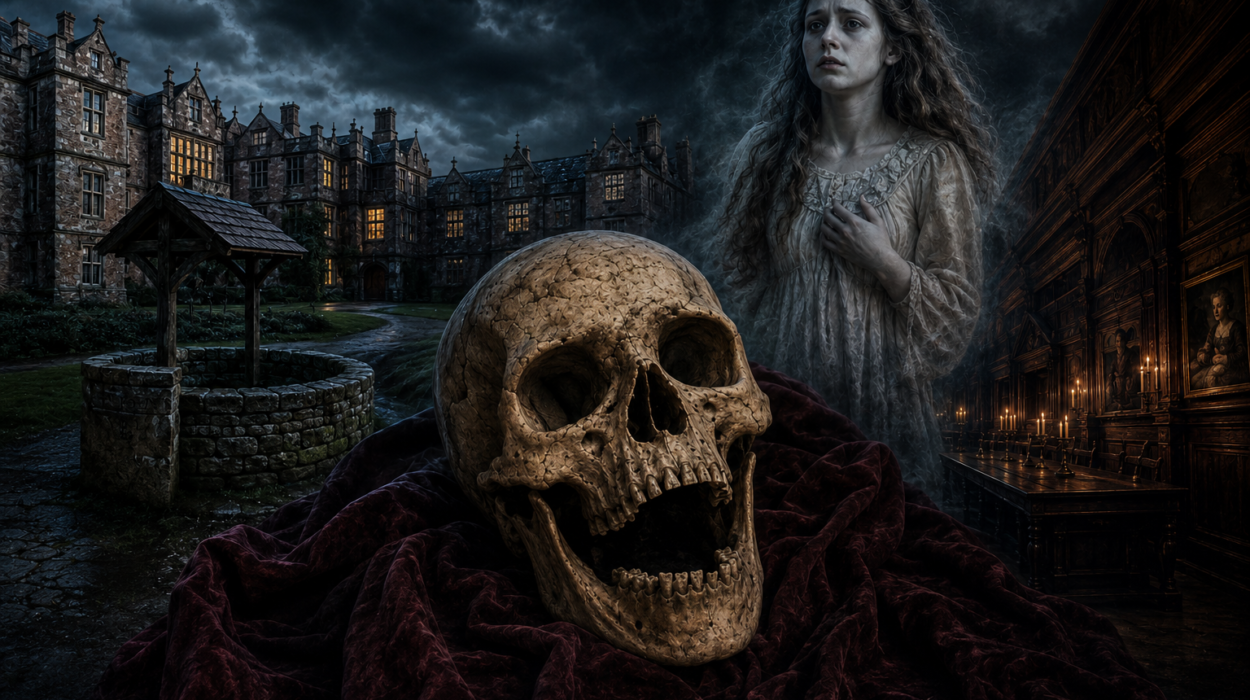
Soon after the discovery, whispers of something darker began to spread. Newspapers reported mysterious illnesses, unexpected deaths, strange coincidences, and eerie events surrounding those who entered the tomb. Headlines spoke of an ancient curse placed upon anyone who disturbed the resting place of the young king. Stories claimed that mysterious forces were taking revenge on those who dared to violate the sacred burial.
The legend grew rapidly.
Within months, the “Curse of the Pharaoh” had become one of the most famous supernatural stories in modern history. Books, magazines, films, documentaries, and novels repeated the tale. For many people, the curse became inseparable from Tutankhamun himself.
But how much of the legend is actually true?
Did ancient Egyptians really place deadly curses on royal tombs? Were the strange deaths connected to supernatural forces? Could hidden bacteria, toxic mold, or poisonous gases explain some of the reported illnesses? Or was the curse largely a creation of sensational journalism eager to sell newspapers?
More than a century after the discovery of Tutankhamun’s tomb, historians, archaeologists, physicians, microbiologists, and forensic scientists have carefully examined the evidence.
The real story is every bit as fascinating as the legend. It combines ancient beliefs, remarkable archaeology, human psychology, scientific investigation, and one of the greatest media sensations of the twentieth century.
Understanding the Curse of Tutankhamun means separating myth from fact while appreciating why this extraordinary story continues to fascinate millions of people around the world.
Who Was Tutankhamun?
Tutankhamun was an Egyptian pharaoh who ruled during the Eighteenth Dynasty of the New Kingdom.
He became king around 1332 BCE while still a child, probably between eight and nine years old.
His reign lasted only about nine years before his death around 1323 BCE.
Compared with many Egyptian rulers, Tutankhamun accomplished relatively little during his lifetime.
His greatest historical significance today comes not from his political achievements but from the remarkable preservation of his tomb.
Most royal tombs in ancient Egypt were robbed long before modern archaeologists arrived.
Tutankhamun’s burial, however, remained largely intact.
This extraordinary preservation transformed an otherwise relatively minor pharaoh into one of the most famous figures in world history.
Ancient Egypt and the Importance of Tombs
To understand the legend of the curse, it helps to understand how ancient Egyptians viewed death.
The Egyptians believed death was not the end of existence.
Instead, it marked the beginning of another stage of life.
They believed the soul needed a properly preserved body, food offerings, protective spells, and valuable possessions to continue living in the afterlife.
This belief led to elaborate burial practices.
Bodies were carefully mummified.
Magnificent tombs were constructed.
Walls were decorated with religious scenes.
Treasures accompanied the deceased.
Protective texts were written to guide the soul safely through the next world.
Because tombs contained valuable objects, ancient Egyptians also worried about grave robbers.
Protecting royal burials became an important concern.
The Discovery of the Tomb
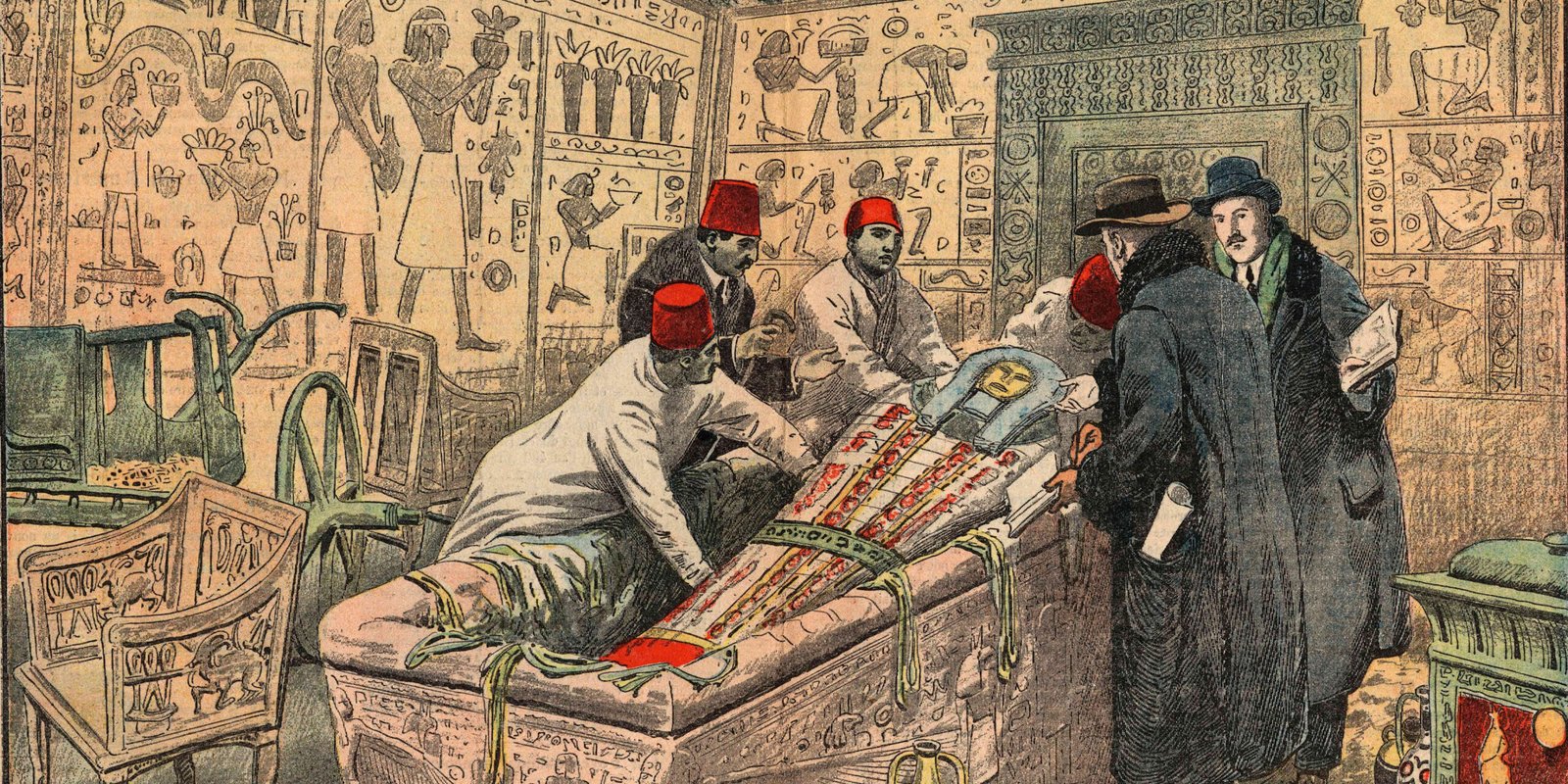
In November 1922, British archaeologist Howard Carter made the discovery that would change archaeology forever.
After years of searching in the Valley of the Kings near Luxor, Carter uncovered stone steps leading downward beneath the desert floor.
These steps eventually reached a sealed doorway bearing ancient royal seals.
When Carter peered through a small opening into the tomb, he reportedly described seeing “wonderful things.”
The rooms beyond contained extraordinary treasures unlike anything previously discovered.
Gold glittered in the light.
Statues stood silently.
Furniture remained where ancient workers had placed it.
The burial chamber contained nested shrines protecting the stone sarcophagus and the young king’s mummy.
It was one of archaeology’s greatest moments.
Why the Discovery Shocked the World
The discovery came during an era when newspapers competed fiercely for dramatic stories.
Tutankhamun’s tomb offered everything readers loved.
It featured hidden treasure.
Ancient mystery.
Lost civilization.
Royal history.
Exotic locations.
Scientific discovery.
The excavation quickly became international news.
Millions followed every development.
Photographs of golden treasures amazed readers across Europe, America, and beyond.
Public fascination with ancient Egypt exploded.
Museums organized exhibitions.
Books became bestsellers.
Egyptian-inspired fashion, jewelry, architecture, and art became fashionable.
Into this atmosphere of excitement entered the legend of the curse.
Did Ancient Egyptians Believe in Curses?
Ancient Egyptians certainly believed in magical protection.
Religious texts often contained prayers, protective spells, and invocations asking gods to defend tombs and sacred places.
However, modern ideas about the “Curse of the Pharaoh” differ significantly from actual ancient Egyptian beliefs.
Some tombs include warning inscriptions directed at potential grave robbers.
These messages usually call upon gods to punish anyone who damages the tomb.
Such inscriptions were intended primarily as deterrents.
Interestingly, no famous curse warning was found inside Tutankhamun’s tomb itself.
Despite popular stories, archaeologists did not discover an inscription stating that death would come upon those who entered the burial.
The famous curse associated with Tutankhamun developed largely after the tomb’s discovery rather than originating from the tomb itself.
The Death of Lord Carnarvon
The event that transformed curiosity into worldwide fear was the death of Lord Carnarvon.
George Herbert, the Fifth Earl of Carnarvon, financed Howard Carter’s excavation.
Only a few months after the tomb’s opening, Lord Carnarvon died in Cairo.
His death resulted from blood poisoning following an infected mosquito bite that became worse after he accidentally cut the bite while shaving.
At the time, antibiotics did not yet exist.
Even relatively minor infections could become life-threatening.
Today, his death would likely have been treated successfully with modern medicine.
However, in 1923 the timing seemed mysterious.
Newspapers immediately connected his death to the recently opened tomb.
The legend of the curse was born.
Strange Stories Begin to Spread
After Carnarvon’s death, newspapers eagerly searched for additional mysterious events.
Stories multiplied rapidly.
Some claimed that lights mysteriously went out across Cairo at the exact moment of his death.
Others reported that his pet dog in England howled and died at precisely the same time.
Many of these dramatic stories lack reliable contemporary evidence or appear to have grown through repeated retelling.
Sensational journalism proved far more powerful than careful historical investigation.
Readers loved mystery.
Editors loved dramatic headlines.
The curse became front-page news.
Howard Carter’s Remarkable Survival
One fact often overlooked in popular accounts is that Howard Carter himself lived for many years after opening the tomb.
He survived until 1939, dying at the age of sixty-four from lymphoma.
If a supernatural curse targeted those who entered the tomb, Carter would seem an obvious victim.
Instead, he spent more than sixteen years continuing archaeological work.
Many other members of the excavation team also lived long lives.
Their survival rarely received the same attention as isolated deaths.
Who Else Entered the Tomb?
Dozens of archaeologists, workers, officials, photographers, conservators, and visitors entered Tutankhamun’s tomb.
Most experienced no unusual medical problems.
Studies examining those directly involved with the excavation found no evidence that they died unusually young compared with similar people of their time.
Several lived into old age.
This broader perspective significantly weakens claims of a deadly curse.
Selective attention often focuses on a handful of unfortunate deaths while ignoring numerous survivors.
The Role of Sensational Journalism
The early twentieth century witnessed fierce competition among newspapers.
Tutankhamun’s discovery offered endless opportunities for exciting headlines.
Stories about supernatural revenge sold newspapers.
Ordinary archaeological reports attracted far less attention.
As a result, coincidence often became mystery.
Natural deaths became evidence of ancient magic.
Rumors quickly transformed into accepted “facts.”
Over time, repeated retelling blurred the distinction between documented events and fictional embellishment.
Much of the modern curse legend owes more to journalism than archaeology.
Could Toxic Mold Explain the Curse?
Some scientists have explored whether microorganisms inside sealed tombs might pose health risks.
Certain fungi produce spores that can affect people with weakened immune systems.
Species such as Aspergillus have occasionally been detected in ancient tomb environments.
In rare cases, inhaling large numbers of fungal spores may contribute to respiratory illness.
However, healthy individuals usually experience little or no effect.
Moreover, no convincing evidence links mold exposure directly to Lord Carnarvon’s death or most other cases associated with the alleged curse.
While microbial hazards deserve attention during archaeological work, they do not adequately explain the broader legend.
Were Poisonous Gases Present?
Another proposed explanation involves toxic gases accumulating inside sealed chambers.
Researchers have considered gases such as ammonia, hydrogen sulfide, formaldehyde, or carbon dioxide.
Although small amounts of various gases may exist in enclosed spaces, measurements inside Egyptian tombs have generally not revealed concentrations capable of explaining the alleged curse.
Ventilation during excavation further reduced potential risks.
No strong scientific evidence supports poisonous gases as the primary cause of mysterious deaths.
Ancient Bacteria and Hidden Diseases
Some have suggested ancient bacteria remained dormant inside sealed tombs for thousands of years.
Modern microbiology shows that certain microorganisms can survive for extended periods under favorable conditions.
However, dangerous disease-causing bacteria generally require living hosts or suitable environments to remain infectious.
Current scientific evidence does not support the idea that ancient tomb bacteria caused the famous curse.
Researchers continue studying ancient microbes, but no verified connection exists with Tutankhamun’s excavation.
Human Psychology and the Power of Belief
Psychology helps explain why curse stories become so persuasive.
Humans naturally search for patterns.
When unusual events occur close together, people often assume they are connected.
This tendency can produce misleading conclusions.
If someone believes a place is cursed, ordinary coincidences may appear deeply meaningful.
Selective memory strengthens the effect.
People remember unusual events while forgetting countless ordinary ones.
Fear itself can also influence physical symptoms.
Stress sometimes contributes to headaches, fatigue, increased heart rate, or other discomforts.
Psychology alone cannot explain every story, but it helps explain why belief in the curse spread so quickly.
Coincidence Versus Causation
One of science’s most important principles is distinguishing coincidence from causation.
Simply because one event follows another does not mean the first caused the second.
Millions of people die every year from illness, accidents, or natural causes.
Given enough individuals connected to a famous event, some deaths will inevitably occur.
Without careful statistical analysis, coincidence may appear mysterious.
Studies comparing the life expectancy of those involved in Tutankhamun’s excavation found no convincing evidence of unusually high mortality.
This suggests coincidence provides a better explanation than supernatural punishment.
Tutankhamun’s Health
Ironically, modern science has revealed that Tutankhamun himself experienced significant health problems.
CT scans and DNA analysis suggest he suffered from several inherited conditions.
Evidence indicates he had a clubfoot and other skeletal abnormalities.
He may have required walking sticks, many of which were found in his tomb.
Researchers also detected evidence of malaria infection.
Although debate continues regarding the precise cause of his death, current evidence suggests natural illness rather than murder.
Scientific investigation has replaced earlier speculation with increasingly detailed understanding.
Modern Technology Unlocks Ancient Secrets
Tutankhamun’s mummy has undergone extensive scientific examination.
CT scanning allows researchers to examine bones and soft tissues without damaging the mummy.
DNA analysis reveals family relationships.
Chemical analysis studies embalming materials.
Radiology reconstructs ancient injuries and diseases.
These techniques have transformed Egyptology.
Instead of relying solely on visual observation, researchers now investigate mummies using advanced medical technology.
Science continues revealing remarkable details about Tutankhamun’s life and death.
Why the Curse Story Refuses to Die
Despite overwhelming scientific skepticism, the curse remains enormously popular.
Part of its appeal lies in human fascination with mystery.
Ancient Egypt already possesses enormous cultural attraction.
Golden treasures.
Mummies.
Pyramids.
Hieroglyphs.
Hidden tombs.
Adding a supernatural curse creates an irresistible story.
Films, novels, television shows, and documentaries continue introducing new generations to the legend.
Fiction often proves more memorable than careful historical evidence.
Ancient Egyptian Views of Protection
Although Tutankhamun’s specific curse is largely mythical, ancient Egyptians certainly sought spiritual protection.
Religious texts such as the Pyramid Texts, Coffin Texts, and the Book of the Dead contained spells intended to safeguard the deceased.
Protective amulets accompanied mummies.
Gods were invoked to defend tombs.
These practices reflected genuine religious beliefs.
Modern misunderstandings arise when these traditions become transformed into Hollywood-style revenge stories.
The original purpose centered on ensuring successful passage into the afterlife rather than hunting future archaeologists.
The Ethical Side of Tomb Excavation
The curse legend also raises important ethical questions.
Should ancient tombs be opened?
Archaeologists argue that careful excavation preserves knowledge before looting or environmental damage destroys it.
At the same time, researchers recognize that tombs are burial places deserving respect.
Modern archaeological standards emphasize careful documentation, conservation, and cultural sensitivity.
The goal is not treasure hunting but understanding history.
How Archaeology Has Changed Since 1922
Howard Carter worked according to the best archaeological methods available in his era.
Nevertheless, archaeology has advanced tremendously.
Today’s excavations employ digital mapping, laser scanning, satellite imagery, DNA analysis, isotope chemistry, 3D modeling, and microscopic analysis.
Conservation begins immediately upon discovery.
Researchers prioritize preserving artifacts in their original context.
Modern archaeology seeks information rather than simply collecting beautiful objects.
Tutankhamun’s tomb played an important role in encouraging these improved standards.
Separating Myth from Reality
When all available evidence is examined, a clear picture emerges.
Tutankhamun’s tomb was genuinely extraordinary.
Its discovery transformed archaeology.
Some individuals connected with the excavation later died, including Lord Carnarvon.
However, their deaths occurred from identifiable medical causes.
Many others lived long, healthy lives.
No credible evidence demonstrates the existence of a supernatural curse.
The legend arose through coincidence, media sensationalism, public fascination with ancient Egypt, and humanity’s enduring love of mysterious stories.
Science does not diminish the wonder of Tutankhamun’s tomb.
Instead, it reveals an even richer and more remarkable reality.
The Legacy of Tutankhamun
More than one hundred years after the discovery, Tutankhamun remains the world’s most famous pharaoh.
His treasures have traveled internationally in exhibitions attracting millions of visitors.
Researchers continue studying every aspect of his life.
New technologies regularly produce fresh insights.
Meanwhile, the curse legend continues entertaining audiences through books, films, and popular culture.
Although the myth lacks scientific support, it helped spark worldwide interest in ancient Egypt.
In an unexpected way, the legend encouraged millions to learn about archaeology, history, and one of humanity’s greatest civilizations.
Conclusion
The Curse of Tutankhamun is one of the most enduring legends in modern archaeology, blending ancient beliefs, extraordinary discoveries, sensational journalism, and human fascination with the unknown. Since the opening of the young pharaoh’s tomb in 1922, stories of mysterious deaths and supernatural revenge have captured imaginations across the world. Yet when these stories are examined through the lens of history, medicine, archaeology, and science, the evidence tells a very different story.
Ancient Egyptians certainly believed in protecting their tombs through religious rituals and sacred texts, but no deadly curse specifically warning intruders was discovered inside Tutankhamun’s tomb. The death of Lord Carnarvon, though tragic, can be explained by a severe infection following a mosquito bite at a time when effective antibiotics did not yet exist. Many other individuals who entered the tomb—including Howard Carter himself—lived for many years afterward, making the idea of a selective supernatural curse difficult to support.
Scientific investigations into toxic mold, ancient bacteria, poisonous gases, and other natural explanations have likewise found no convincing evidence that the tomb itself caused a deadly chain of deaths. Instead, psychology, coincidence, selective memory, and sensational newspaper reporting played major roles in transforming an archaeological discovery into one of history’s greatest mysteries.
Perhaps the greatest lesson of the Curse of Tutankhamun is that reality can be just as compelling as myth. The real story is one of remarkable archaeological achievement, advanced scientific investigation, and a civilization whose beliefs about life, death, and eternity continue to inspire wonder more than three thousand years after the young king was laid to rest. While the supernatural curse belongs to the world of legend, the enduring legacy of Tutankhamun belongs to history—and it remains one of humanity’s most extraordinary windows into the ancient past.